
Discover why combining penetration testing with MSSP services strengthens cybersecurity, improves compliance, closes detection gaps, and reduces breach risks.
The Threat Is Already Inside Your Perimeter
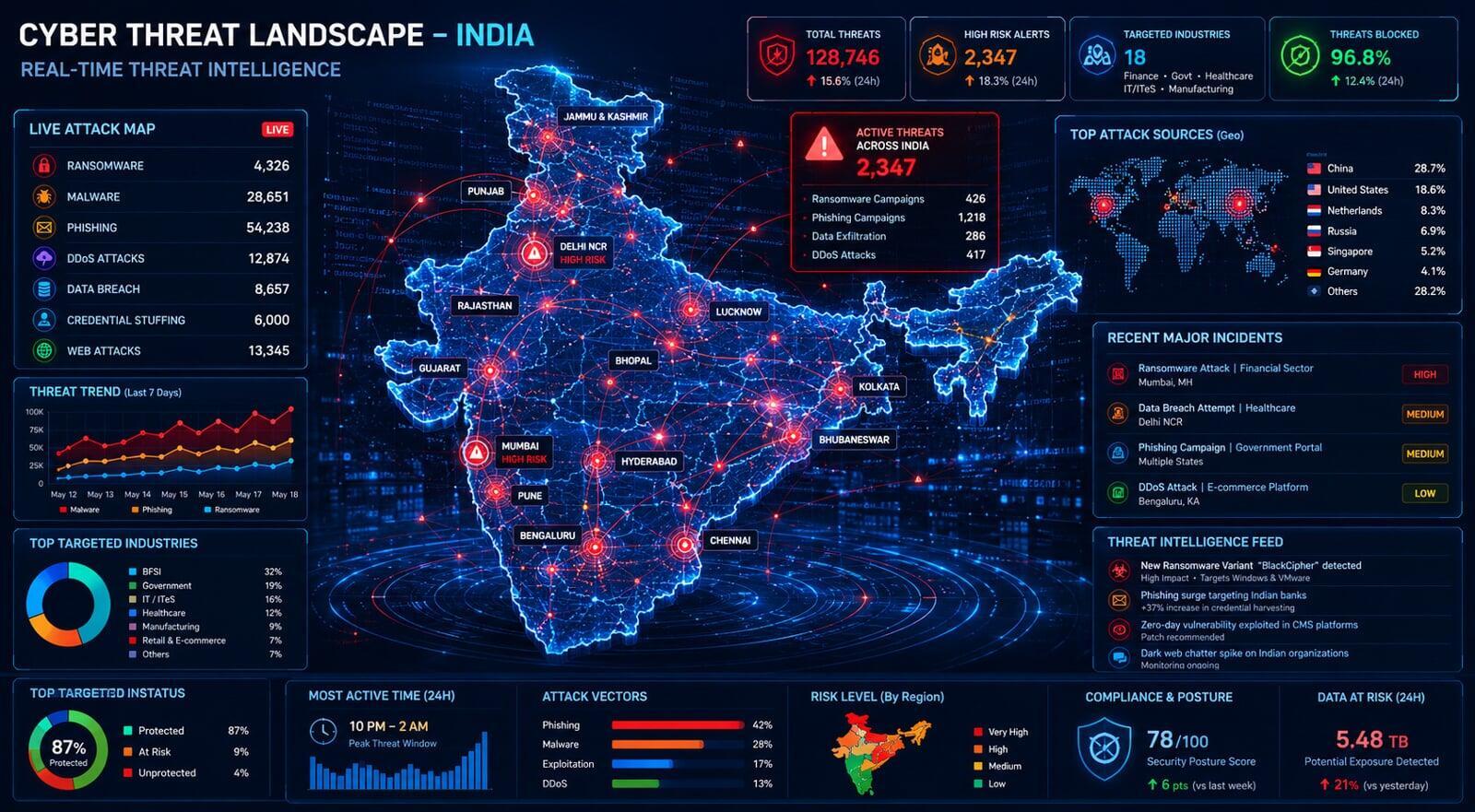
Here is a number worth pausing on: nearly 83% of all Indian organisations experienced a cyberattack in 2023, and around 48% reported ten or more cyber incidents in that same period, each one carrying substantial monetary loss. Meanwhile, weekly cyber-attack volumes in India already exceed 3,300, placing the country well above the global average. The India cybersecurity market, valued at roughly USD 11–12 billion in 2025, is projected to surge past USD 38 billion by 2033, growing at a compound annual rate of over 18%. That trajectory does not reflect ambition alone; it reflects urgency.
In this environment, organisations are asking a legitimate and pressing question: is reactive monitoring enough? We believe the honest answer is no. Continuous surveillance from a Managed Security Service Provider (MSSP) is indispensable, but surveillance alone cannot tell you whether your defences would actually hold if a determined adversary tested them. That is precisely where penetration testing enters the equation, not as a replacement for managed security, but as its most powerful complement.
What Penetration Testing Actually Does and What It Does Not
Before we make the case for combining these two disciplines, it is worth being precise about what each one is designed to accomplish because the terminology is frequently conflated in ways that lead to poor purchasing decisions.
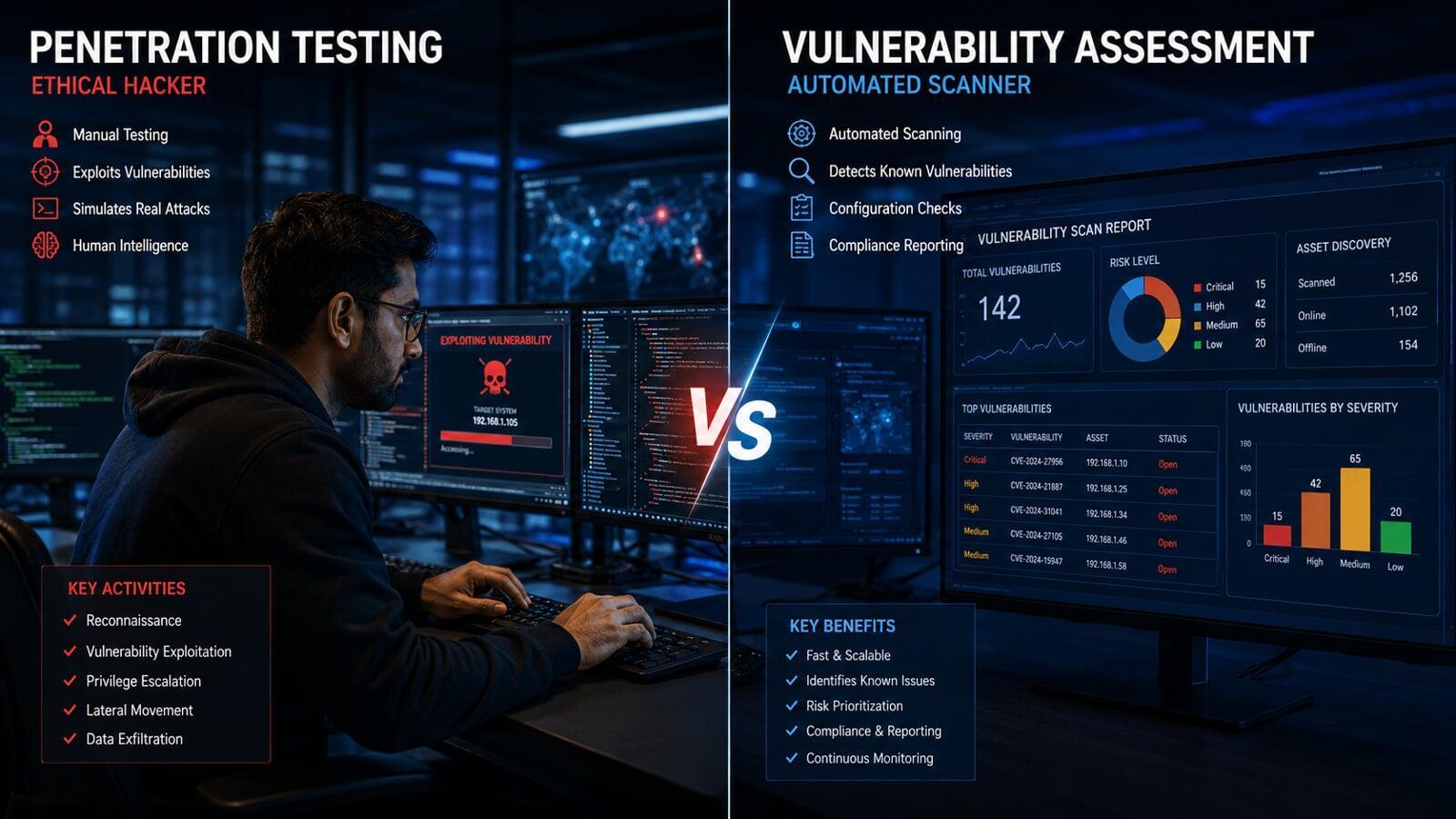
Penetration testing, often called pen testing or ethical hacking, is an authorised, structured simulation of a real-world cyberattack. Skilled security professionals, working under a defined scope and rules of engagement, actively attempt to breach systems, applications, or networks using the same techniques that malicious actors would deploy. The objective is not merely to list potential weaknesses; it is to demonstrate whether those weaknesses are actually exploitable and to quantify the business impact if they were. A penetration test takes, on average, 15 to 20 days for a mid-sized scope, involves substantial manual analysis, and produces findings that automated tools simply cannot replicate because human adversaries think in ways that scripts do not.
A vulnerability assessment, by contrast, uses automated scanning tools to identify known weaknesses across a broad surface area. It is faster, less expensive, and highly effective for ongoing hygiene, but it cannot tell you whether a vulnerability chain actually leads to a crown-jewel database, nor whether your incident detection would fire before an attacker pivots laterally. As Picus Security notes, penetration testing validates exploitability by simulating attacker behaviour under controlled but realistic conditions, delivering attacker-level clarity that scanning alone cannot provide.
The MSSP Model: Continuous Coverage at Scale
Managed Security Service Providers exist because the cybersecurity labour market in India, and globally, is structurally short of skilled professionals. A full in-house 24×7 Security Operations Centre (SOC) for an enterprise of 500 users can cost anywhere between ₹8 to ₹15 lakhs per year in personnel alone, before factoring in licensing, tooling, and infrastructure. An MSSP delivering equivalent coverage typically charges ₹1.5 to ₹5 lakhs per month at the enterprise tier, and that cost buys continuous monitoring, SIEM/SOAR pipeline management, endpoint detection, incident response, and compliance alignment with frameworks such as CERT-In, ISO 27001, PCI DSS, and the Digital Personal Data Protection Act (DPDPA).
The core MSSP value proposition is breadth and persistence. An MSSP watches your environment around the clock, correlates telemetry across thousands of events per second, hunts for anomalous behaviour mapped to the MITRE ATT&CK framework, and escalates genuine threats before they metastasise. This is reactive and detective security at its most capable, and it is genuinely irreplaceable for organisations that cannot build those capabilities in-house.
But here is the structural gap that every MSSP-savvy CISO eventually confronts: detection only works if there is something to detect. If an adversary exploits a misconfigured cloud storage bucket before any alert rule has been written for that specific condition, or chains three individually low-severity findings into a privilege escalation path that bypasses your EDR, the SOC may never see the initial foothold. Penetration testing is the mechanism that discovers those gaps before a real attacker does.
Why Penetration Testing Amplifies MSSP Effectiveness
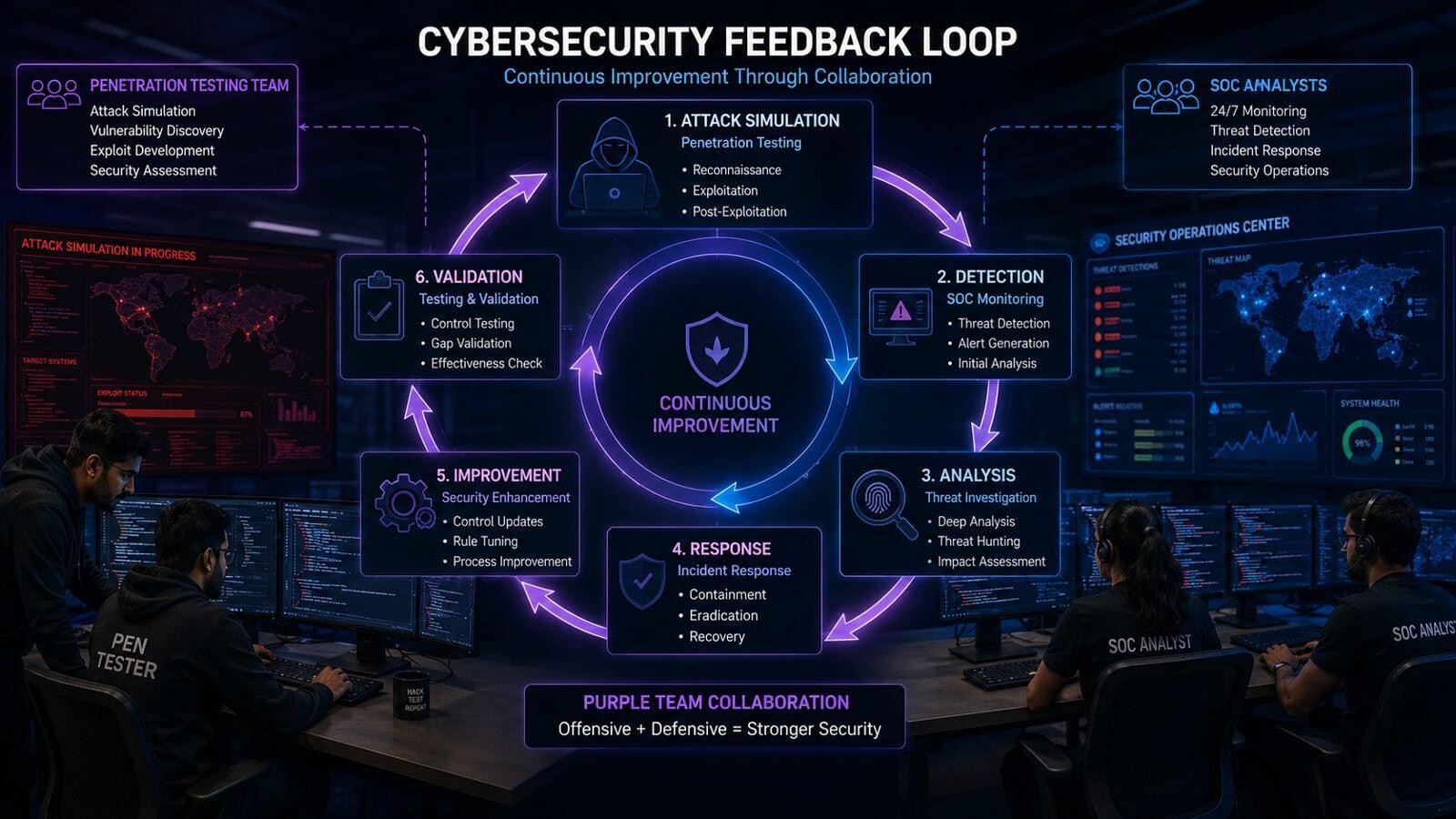
When we position penetration testing alongside MSSP-delivered cyber security services, we are not describing two parallel programmes that happen to co-exist. We are describing a feedback loop that makes each service exponentially more effective than either would be alone.
Consider the mechanics. An MSSP deploys detection rules based on known threat patterns, SIEM correlation logic, and the attack signatures it has encountered across its client base. Those rules are only as good as the attack surface knowledge they are built on. A penetration test conducted against the same environment, ideally by a team that works in coordination with the MSSP, reveals the specific pathways, misconfigurations, and logic flaws that existing detection rules may not cover. The findings then feed directly back into the MSSP's detection engineering, closing coverage gaps in a systematic and evidence-based way.
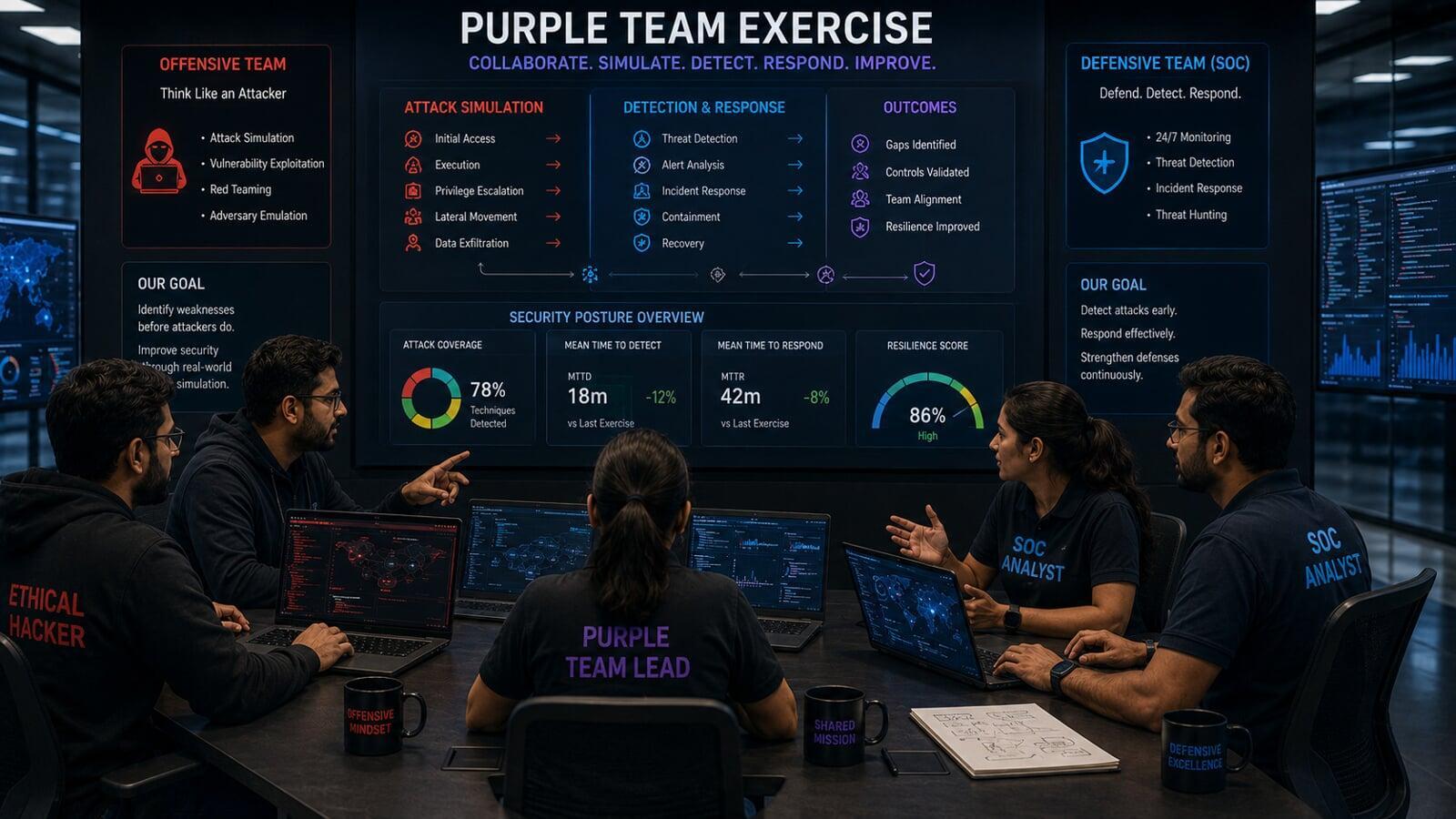
Furthermore, penetration testing exercises the MSSP's incident response capabilities in a controlled setting. When ethical hackers simulate a lateral movement campaign or a credential stuffing attack, the SOC team either detects it or does not. Both outcomes is valuable: detection confirms that the controls work; non-detection identifies exactly which log sources, correlation rules, or alerting thresholds need adjustment. This kind of purple team exercise, where offensive and defensive teams collaborate on the same scenario, is among the most efficient investments an organisation can make in its security programme.
Regulatory Compliance and the Role of Pen Testing in India
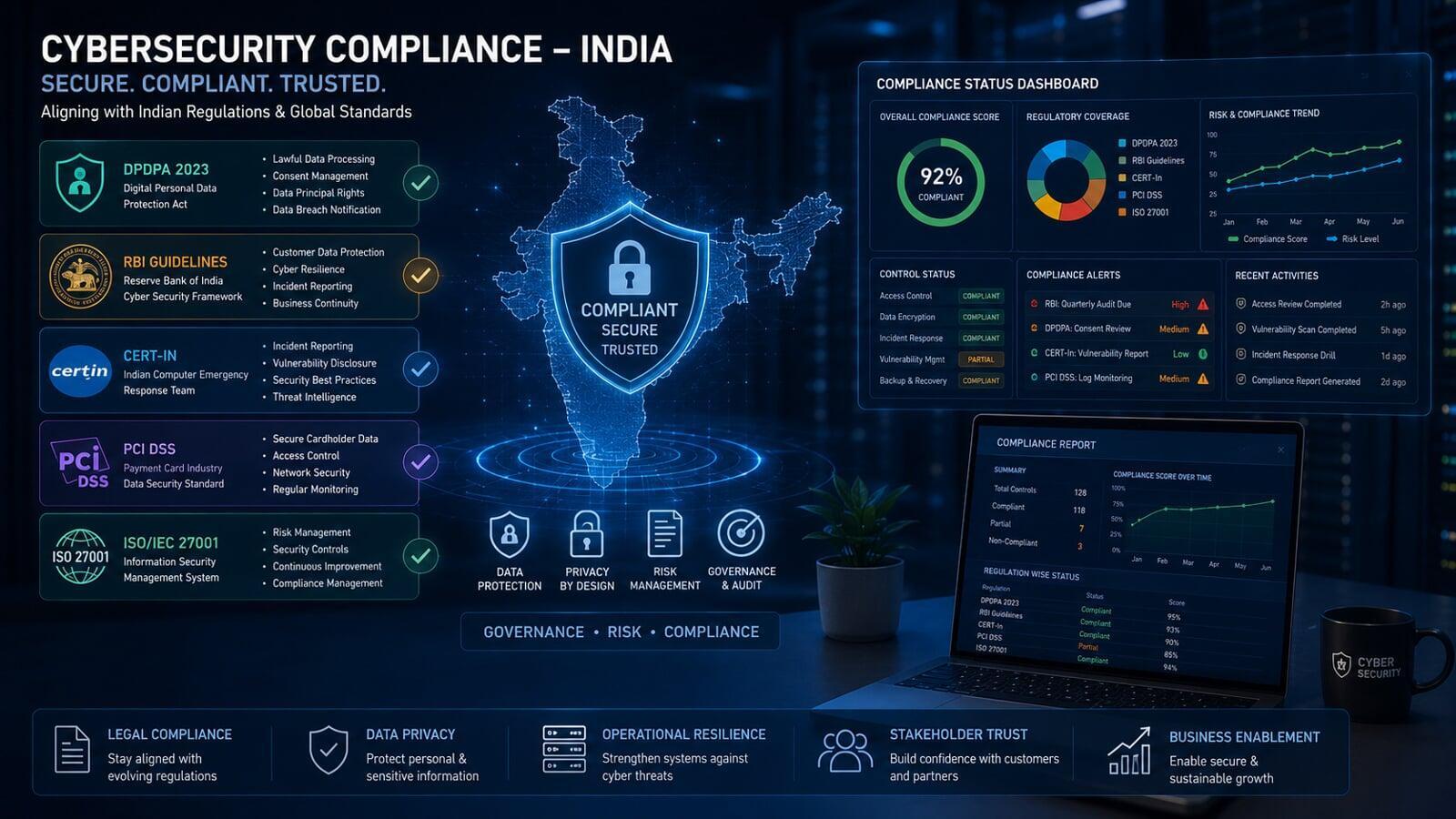
India's regulatory environment for cybersecurity has matured substantially over the past three years. The DPDPA imposes significant penalties for inadequate data protection. The Reserve Bank of India (RBI) mandates annual penetration testing for banks and non-banking financial companies. CERT-In directives require organisations to maintain detailed logs and demonstrate incident response readiness. ISO 27001, a standard increasingly required in enterprise procurement contracts, expects periodic penetration testing as evidence of technical controls effectiveness.
For organisations working with Delphi Infotech's cybersecurity solutions, this regulatory picture is not abstract. It translates directly into audit requirements, board-level reporting obligations, and in some sectors, potential liability. An MSSP alone can help you maintain logs and monitor for incidents, but it cannot produce the penetration test report that an auditor will ask for. Integrating pen testing into your MSSP relationship, either through an MSSP that offers it directly or through a coordinated third-party engagement, closes that compliance gap cleanly.
Choosing the Right Penetration Testing Scope Within an MSSP Engagement
Not all penetration tests are equal in depth, methodology, or relevance. When integrating pen testing into an MSSP-led security programme, we recommend thinking about scope across four distinct dimensions:
Network Penetration Testing examines external and internal network infrastructure — firewalls, routers, VPN concentrators, segmentation controls — to identify pathways an attacker might use to move from an external position into the internal environment, or from a compromised internal endpoint toward sensitive systems.
Application Penetration Testing targets web applications, APIs, and mobile interfaces. Given that most modern business logic is now delivered through application layers, this is often where the highest-impact vulnerabilities reside. SQL injection, authentication bypass, business logic flaws, and insecure direct object references are the kinds of findings that automated scanners consistently miss.
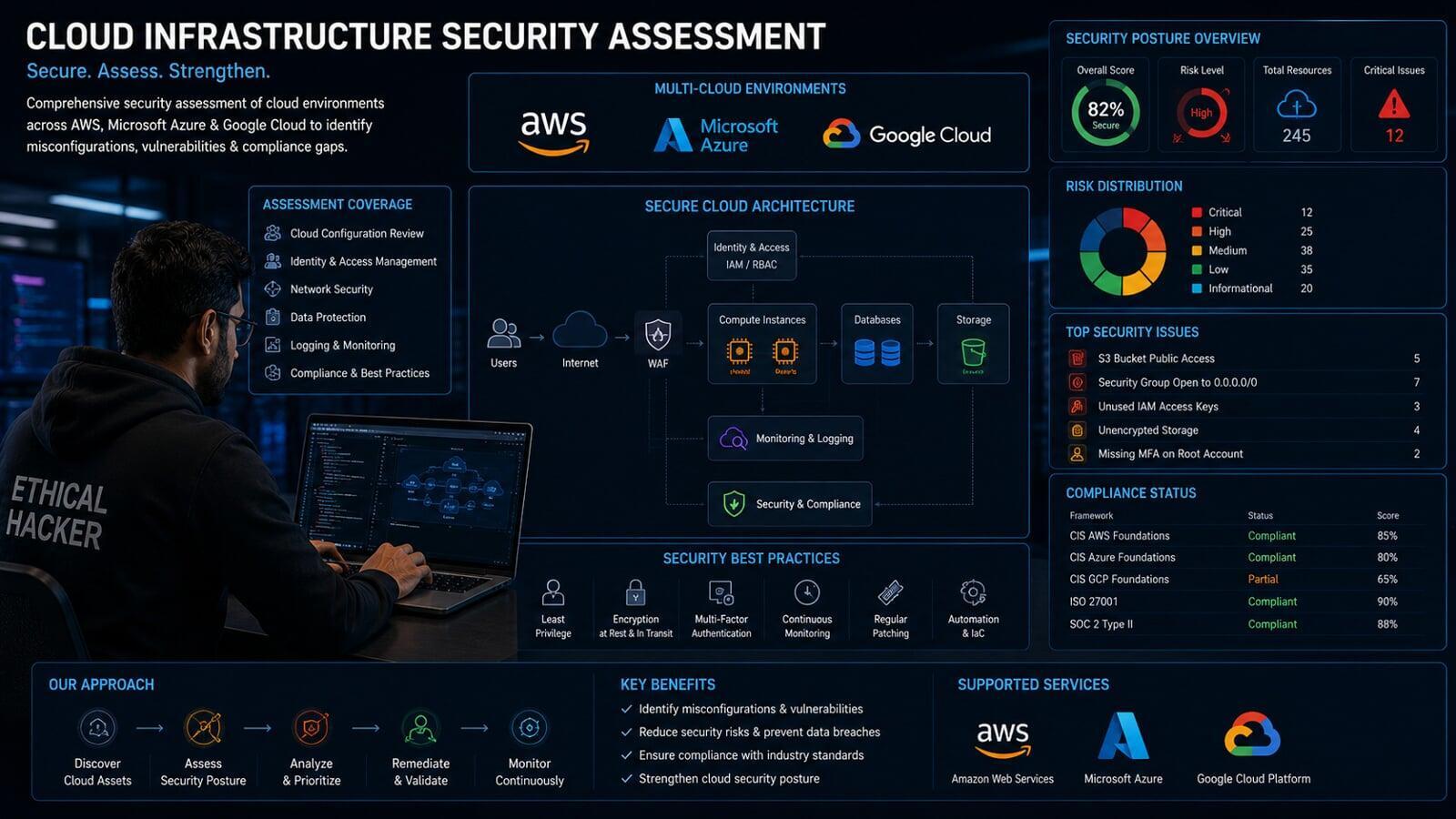
Cloud Configuration Testing has become essential as Indian enterprises accelerate adoption of AWS, Azure, and Google Cloud. Misconfigured cloud services remain the top vulnerability in India's cloud security landscape, according to the DSCI India Cyber Threat Report 2025. An MSSP monitoring your cloud environment may detect post-exploitation activity, but only a dedicated cloud pen test can identify whether your S3 bucket policies, IAM role assignments, or container orchestration configurations are defensible before an attacker tests them.
Social Engineering and Phishing Simulations test the human layer, the one your technical controls cannot fully protect. With India's BFSI, healthcare, and manufacturing sectors identified as the most targeted by sophisticated adversaries, understanding whether your employees would recognise and report a targeted phishing attempt is not an academic exercise.
The Intelligence Advantage: What MSSPs Learn from Pen Test Reports
One of the most underappreciated benefits of pairing these disciplines is the threat intelligence yield that flows from a well-scoped penetration test back into an MSSP's operations.
When ethical hackers produce a detailed findings report, documenting the exact techniques used, the tools deployed, the credential paths leveraged, and the evidence collected along the way, that report is a near-perfect blueprint for MSSP detection engineering. The MSSP team can use the findings to write new SIEM correlation rules tuned to the specific techniques used in the test, validate that existing rules would have fired at each stage, and update runbooks to account for the attack chains that proved most effective.
This is particularly valuable in the context of MITRE ATT&CK mapping. Modern MSSPs organise their detection logic around the ATT&CK framework's taxonomy of adversary tactics, techniques, and procedures (TTPs). A pen test report that maps findings to the same taxonomy allows the MSSP to identify specific technique coverage gaps with precision, not at the conceptual level, but at the level of actual tool behaviour observed in your environment.
Building the Business Case: Cost and Risk Quantification
Security leaders in India frequently face a budget conversation that goes something like this: "We already pay for an MSSP, why do we also need penetration testing?" The answer lies in risk quantification, and it is increasingly possible to make this case with numbers rather than generalities.
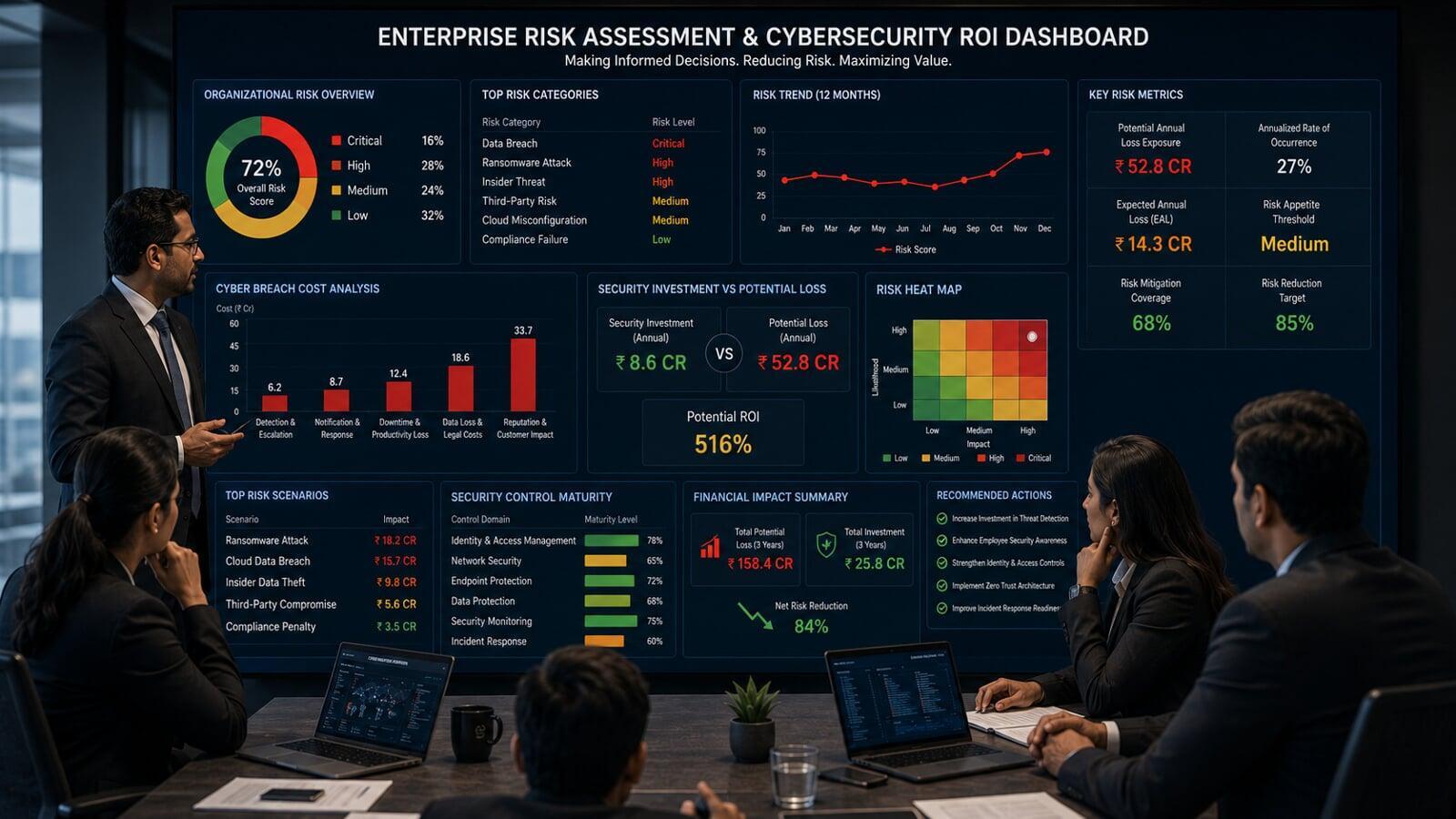
A single data breach in India costs an average of USD 2.18 million in revenue impact, according to the DSCI report. For organisations in BFSI or healthcare, the two sectors most targeted by sophisticated threat actors in India, that figure can be substantially higher when regulatory penalties, reputational damage, and customer attrition are included. The annual cost of a well-scoped penetration testing programme for a mid-sized enterprise typically falls between ₹5 to ₹15 lakhs, depending on scope and methodology. The expected value calculation is not complex.
The more sophisticated framing, however, is not about insurance against the cost of a breach; it is about operational assurance. When a board member, an auditor, or a major enterprise client asks: "How do you know your security controls work?" the honest answer requires evidence. An MSSP dashboard showing low alert volumes is not evidence that controls are effective; it may simply mean that no attacker has tested them recently. A penetration test report demonstrating that a team of skilled ethical hackers, with the full backing of your organisation, could not achieve their objectives without triggering detection, that is evidence.
For organisations partnering with Delphi Infotech's global partners across the cybersecurity ecosystem, this kind of documented assurance is increasingly a procurement prerequisite, not a nice-to-have.
Common Mistakes Organisations Make When Structuring These Services
We have observed several recurring patterns in how organisations get this pairing wrong, and they are worth naming directly.
Treating penetration testing as a one-time checkbox. A single penetration test, conducted at the time of a compliance audit and then repeated eighteen months later, gives you a point-in-time snapshot that rapidly loses relevance as your environment evolves. Cloud configurations change. Applications are updated. New integrations are added. An effective programme incorporates testing at meaningful intervals, typically annually at minimum, with targeted tests triggered by significant infrastructure changes.
Failing to share pen test findings with the MSSP. This is perhaps the most common mistake, and its consequences are immediate. If your MSSP does not receive the penetration test report, it cannot update its detection logic to account for the attack paths that were discovered. The findings sit in a PDF; the SOC continues operating with the same coverage gaps, and the value of the test is largely wasted.
Scoping the test too narrowly under cost pressure. A penetration test scoped only to the external perimeter, while leaving cloud infrastructure, internal segmentation, and application layers unexamined, produces findings that are systematically biased toward the part of your environment that is already best defended. The most significant risks are frequently internal, or reside at the intersection of application logic and cloud configuration.
What to Look for in an MSSP That Integrates Penetration Testing
Not every MSSP offers penetration testing as part of its service portfolio, and not every MSSP that claims to offer it has the same depth of capability. When evaluating an integrated security partner, we suggest examining the following dimensions:
Methodological transparency. A capable MSSP-aligned pen testing practice will be able to describe its methodology in detail, how it handles scoping, what frameworks it tests against (OWASP, PTES, NIST SP 800-115), how it manages evidence, and how findings are validated before they are reported. Vague answers to methodology questions are a meaningful signal.
Reporting quality. A penetration test report should be actionable at the technical level and communicable at the executive level. Technical findings should include reproduction steps, proof-of-concept evidence, CVSS scoring, and prioritised remediation guidance. Executive summaries should contextualise risk in business terms, not just technical severity scores.
Integration with SOC operations. The best integrated engagements involve active coordination between the pen test team and the MSSP SOC, sometimes called a purple team exercise. If a prospective MSSP cannot describe how it operationalises pen test findings into its detection engineering workflow, that is a gap worth probing.
The Integrated Security Model: A Maturity Framework
Organisations at different stages of security maturity will approach the MSSP-plus-penetration-testing combination differently, and that is appropriate. A useful way to think about this is through a maturity lens:
At an emerging maturity level, the priority is establishing baseline coverage, deploying MSSP monitoring, conducting an initial external and application penetration test, and ensuring that CERT-In compliance basics are in place. The goal at this stage is closing the most glaring gaps before they are exploited.
At a developing maturity level, organisations move to annual penetration testing across a broader scope, begin sharing test findings systematically with their MSSP, and start mapping coverage against MITRE ATT&CK. Compliance-driven testing becomes proactive risk-driven testing.
At an advanced maturity level, organisations conduct continuous exposure validation, run periodic purple team exercises where offensive and defensive teams work collaboratively, integrate pen test findings into threat hunting operations, and measure their security programme against adversary TTPs specific to their sector and geography. At this level, the distinction between penetration testing and MSSP operations begins to dissolve, they become a single, integrated security programme with both proactive and reactive components working in tight coordination.

Conclusion: The Case for Integration Is Now Unanswerable
The numbers that opened this blog, 83% of Indian organisations experiencing cyberattacks, 3,300+ weekly attacks, USD 2.18 million average breach cost, are not projections or estimates. They are recent history. The threat environment that produced them is not receding; it is accelerating, driven by AI-assisted attack tooling, expanding cloud and IoT attack surfaces, and geopolitical tensions that are increasingly expressed through cyber operations.
Against that backdrop, the question of whether to pair penetration testing with managed security service provider coverage is no longer really a question. The more useful question is: how to do it well. That means selecting a pen testing methodology that matches your risk profile, sharing findings systematically with your MSSP, using the results to drive detection engineering improvements, and treating the exercise as a repeating programme rather than a point-in-time event.
Key Takeaways
Nearly 83% of Indian organisations experienced a cyberattack in 2023; the threat environment demands both reactive detection and proactive validation.
Penetration testing and MSSP services are complementary, not alternatives. One monitors; the other validates whether the monitoring would actually work.
Pen test findings should feed directly into MSSP detection engineering, this feedback loop is where the combined programme derives most of its value.
Regulatory requirements in India, DPDPA, RBI IT guidelines, CERT-In, PCI DSS, increasingly mandate penetration testing, not just continuous monitoring.
Cloud configuration testing is now a critical and frequently neglected component of any penetration testing scope, given India's accelerating cloud adoption.
Purple team exercises, where offensive and defensive teams collaborate, represent the highest-maturity expression of the MSSP-plus-pen-testing model.
Sharing the pen test report with your MSSP is not optional; without it, the SOC cannot close the coverage gaps the test revealed.
The average cost of a data breach in India (USD 2.18 million) vastly exceeds the annual cost of a well-scoped integrated security programme.
Frequently Asked Questions
Q: What is the difference between penetration testing and vulnerability assessment?
A: A vulnerability assessment uses automated tools to scan broadly for known weaknesses. Penetration testing goes further; skilled security professionals actively attempt to exploit those weaknesses to demonstrate whether they are genuinely exploitable and to show what the impact would be if a real attacker succeeded. Both are necessary, but they answer different questions at different levels of depth.
Q: How often should an organisation conduct penetration testing?
A: At a minimum, annually, and triggered by significant changes such as new cloud infrastructure deployments, major application releases, or merger and acquisition activity. Organisations in regulated sectors (BFSI, healthcare, payments) typically need to test more frequently to meet RBI, CERT-In, or PCI DSS requirements.
Q: Can our MSSP conduct penetration testing, or do we need a separate provider?
A: Some MSSPs offer penetration testing as part of their service portfolio; others operate separate or partner-led practices. What matters most is that the findings from whichever team conducts the test are integrated into the MSSP's SOC operations. If your MSSP cannot describe how it operationalises pen test findings, that gap needs to be addressed.
Q: Is penetration testing legally safe for organisations in India?
A: Yes, provided the engagement is governed by a formal written agreement that defines scope, methodology, rules of engagement, and evidence handling. Penetration tests conducted without authorisation are illegal under the IT Act, 2000. Any reputable provider will require and enforce a detailed scope agreement before commencing work.
Q: What certifications should we look for in a penetration testing provider in India?
A: CERT-In empanelment is the most important certification for the Indian market, as it signals regulatory recognition and adherence to defined standards. CREST certification is a widely respected international signal of testing rigour. For application security specifically, OWASP-aligned methodology is a useful indicator of quality.
Q: How does penetration testing support DPDPA compliance?
A: The Digital Personal Data Protection Act requires organisations to implement appropriate technical and organisational measures to protect personal data. Penetration testing demonstrates that technical controls have been validated against real-world attack scenarios, a stronger form of evidence than policy documentation alone. Combined with an MSSP providing continuous monitoring and 180-day log retention, it supports a comprehensive and defensible compliance posture.
Q: What is a purple team exercise, and do we need one?
A: A purple team exercise is a structured collaboration between an offensive security team (the pen testers) and a defensive team (your MSSP SOC), in which attack scenarios are run in a coordinated way so that detection gaps can be identified and closed in near-real time. It is the most efficient way to improve detection coverage. Organisations at an advanced security maturity level benefit significantly from this model; for organisations earlier in their maturity journey, beginning with a standard penetration test and ensuring findings are shared with the SOC is the appropriate starting point.
Q: How do we estimate the ROI of adding penetration testing to our existing MSSP engagement?
A: The most straightforward framing compares the cost of the penetration testing programme against the expected cost of a breach in your sector. With average breach costs in India at USD 2.18 million and pen testing programmes for mid-sized enterprises typically costing between ₹5 to ₹15 lakhs annually, the expected value calculation strongly favours investment. The more compelling argument, however, is operational: the ability to tell regulators, auditors, and clients that your security controls have been validated against real adversarial activity is a competitive and compliance asset that cannot be built any other way.
For more information about how Delphi Infotech's integrated cybersecurity solutions can support your organisation's security posture, visit our cybersecurity solutions page.