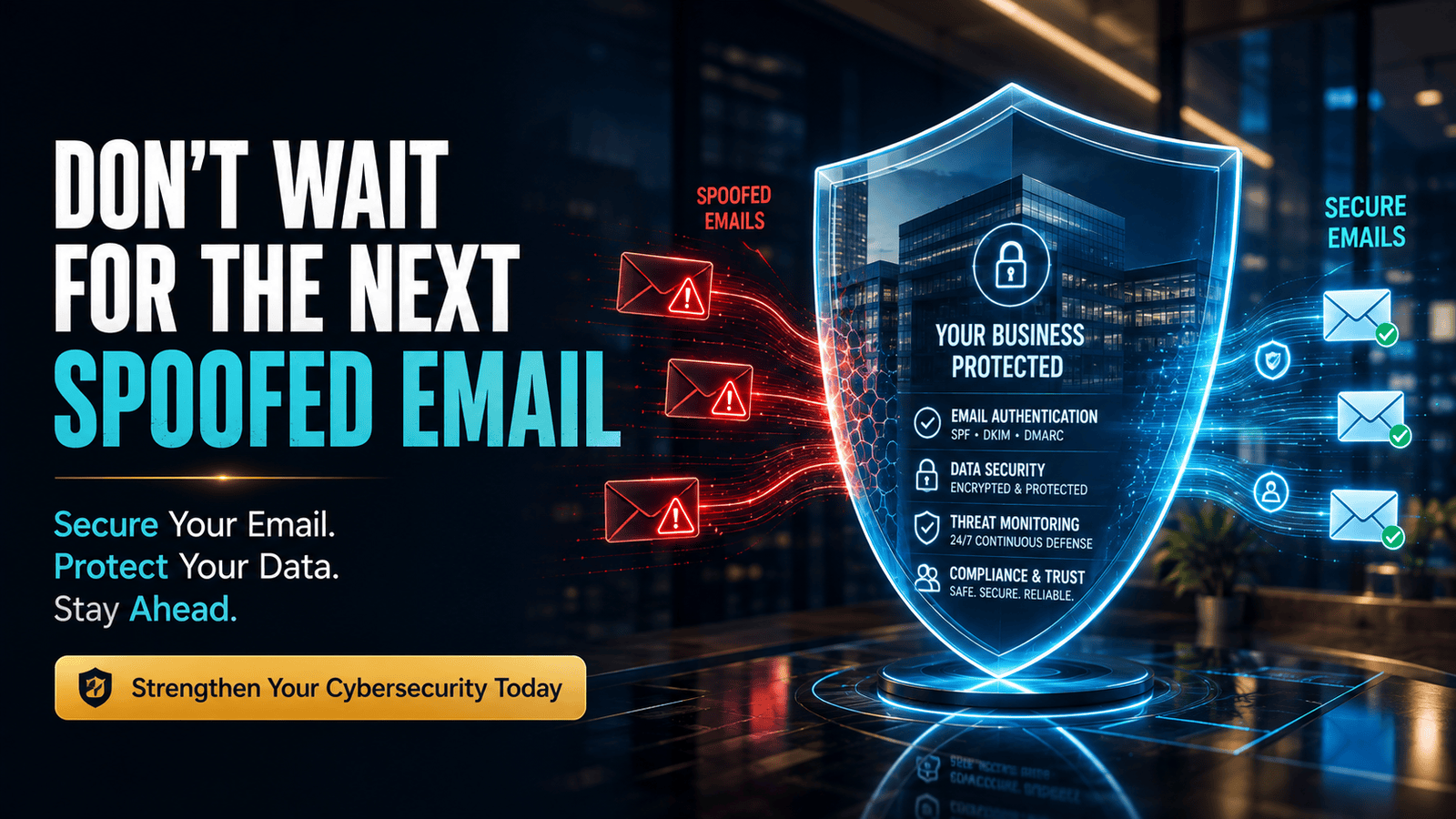
Email spoofing threatens businesses daily. Learn how managed cyber security services and smart data security management stop it before it costs you.
Introduction: The Email in Your Inbox Might Not Be What It Seems
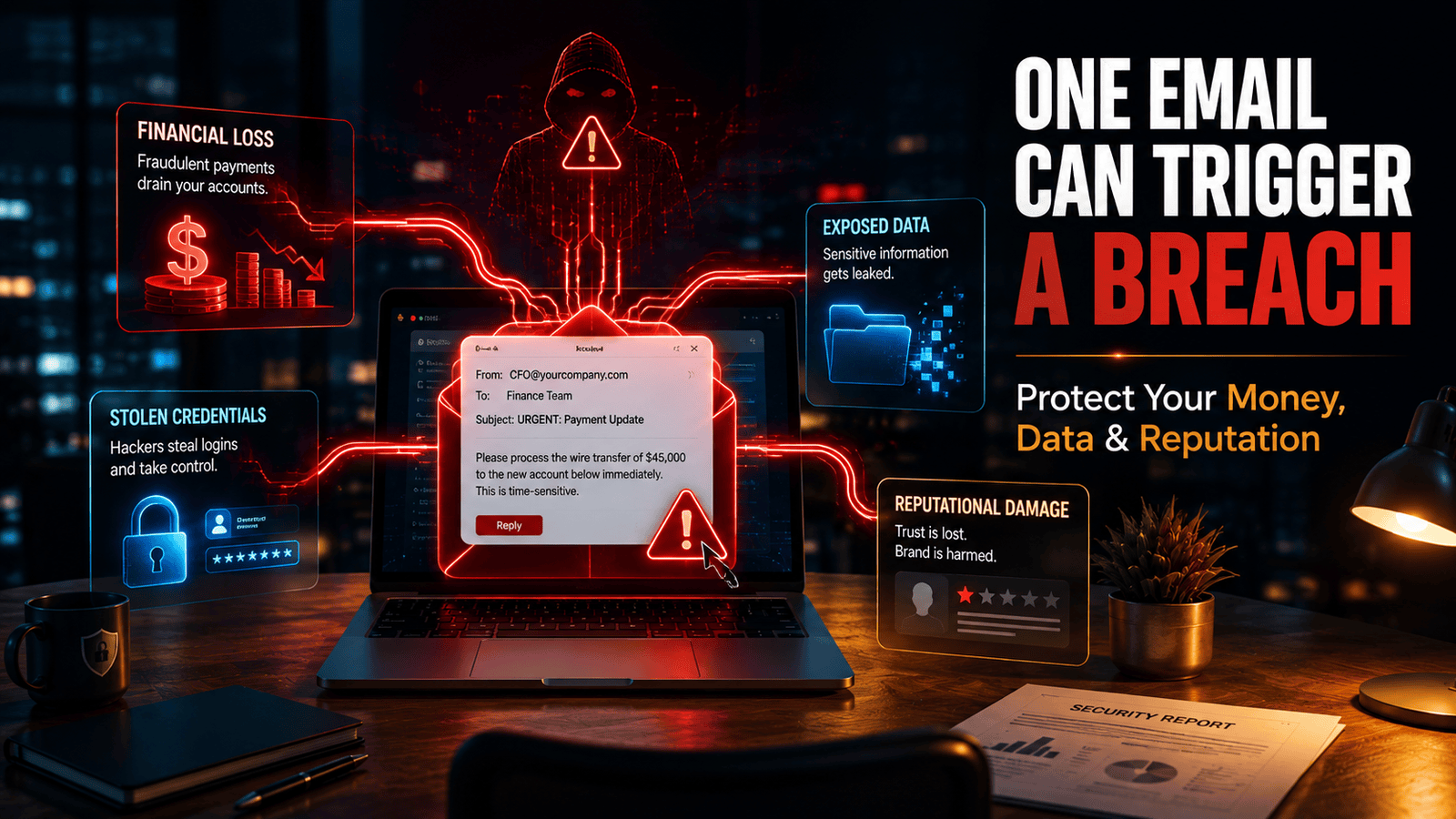
You open your inbox on a Monday morning. There's an email from your CFO asking you to process a wire transfer urgently. The name looks right. The signature looks right. Even the tone sounds familiar. But the CFO never sent it.
This email spoofing is one of the oldest tricks in the cybercriminal's play book, and still one of the most effective. It doesn't rely on breaking through firewalls or cracking passwords. It relies on trust. And trust, once exploited, can cost a company its money, its data, and its reputation in a single click.
What Is Email Spoofing, Exactly?
Email spoofing is a technique where an attacker forges the "From" address of an email so it appears to come from a trusted source, a colleague, a vendor, a bank, or even a well-known brand. The email header is manipulated, but the underlying protocol that sends the message (SMTP, or Simple Mail Transfer Protocol) was never designed with strong sender verification in mind. That historical weakness is exactly what attackers exploit today.
How Email Spoofing Actually Works
At a technical level, spoofing usually happens because:
SMTP lacks built-in authentication : The protocol allows the "From" field to be set to almost anything, regardless of the actual sending server.
Domain authentication isn't configured : Many organizations still haven't properly implemented SPF, DKIM, or DMARC records, leaving their domains wide open for impersonation.
Look-alike domains are cheap and easy to register : Attackers buy domains like "mycompany-inc.com" instead of "mycompany.com," counting on recipients not noticing the difference.
Display name manipulation : tricks the eye. An email might show "John Smith, CFO" in the display name while the actual address is completely unrelated.
Once the email lands in an inbox, the rest is social engineering
creating urgency, mimicking internal language, and pushing the recipient to act before they think.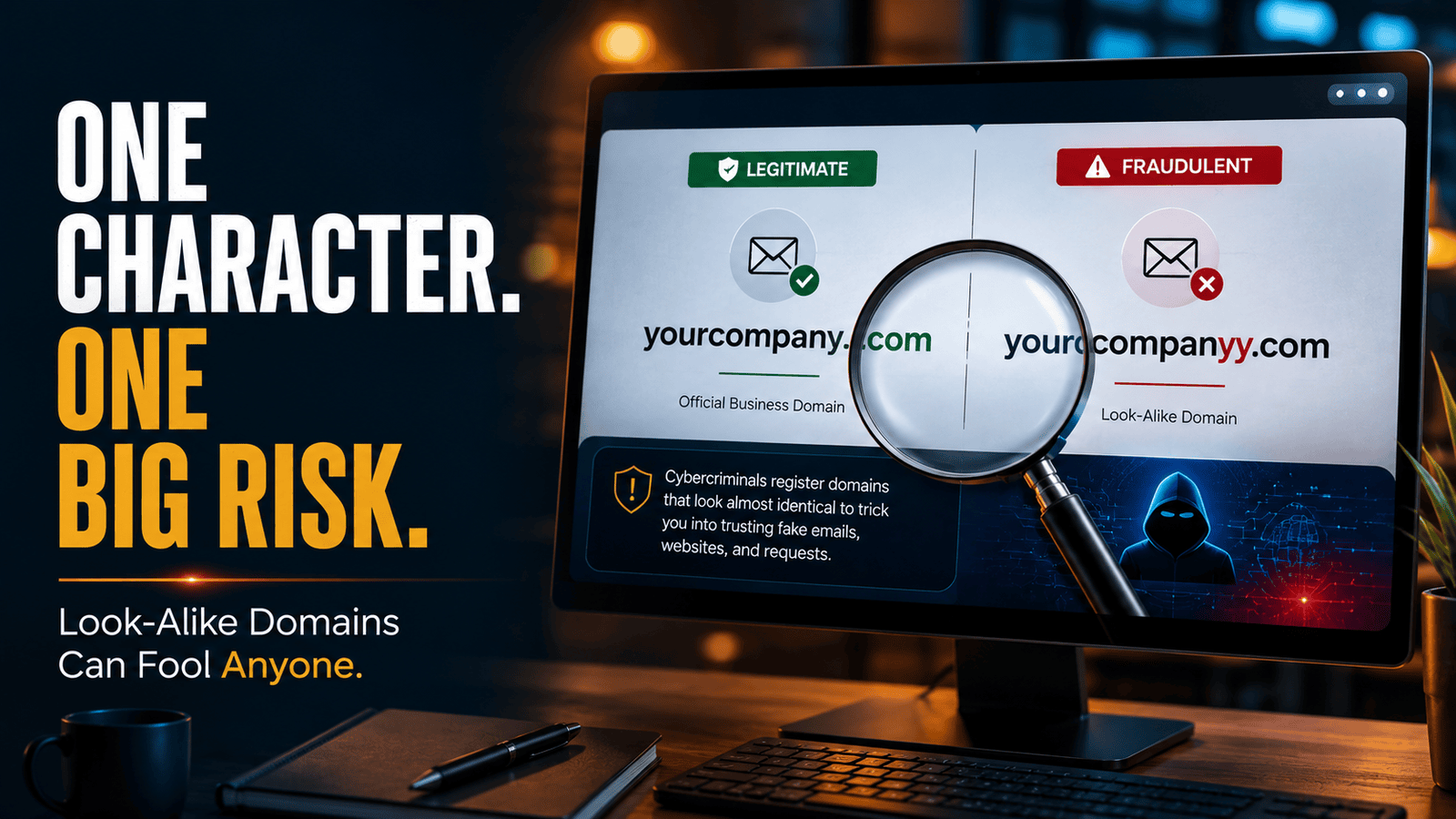
Why Email Spoofing Remains So Dangerous in 2026
Spoofing isn't a "new" threat, but its impact has grown alongside how businesses communicate. A few reasons it remains a top-tier risk:
Business Email Compromise (BEC) losses are enormous : BEC scams, which frequently begin with spoofed emails, have consistently ranked among the costliest categories of cybercrime reported to authorities worldwide, often surpassing losses from ransomware.
Remote and hybrid work increased email reliance : With more approvals, invoices, and sensitive requests moving entirely through email and chat, there are more opportunities for impersonation to slip through.
AI-generated content makes spoofed emails more convincing : Grammar mistakes and awkward phrasing used to be red flags. Generative AI tools have made spoofed messages nearly indistinguishable from legitimate correspondence.
Supply chain trust is exploited : Attackers often spoof a trusted vendor or partner rather than the company itself since recipients are less suspicious of "known" business relationships.
The Real-World Risks of Email Spoofing
It's easy to think of spoofing as a minor nuisance spam that gets filtered out. In reality, the consequences can be severe and long-lasting.
1. Direct Financial Loss
The most immediate risk is money leaving the business. Spoofed emails impersonating executives or vendors routinely trick finance teams into wiring funds or updating payment details for fraudulent accounts. Once the money is sent, recovery is rare.
2. Data Breaches and Credential Theft
Spoofed emails are a common delivery method for phishing links and malicious attachments. A single click can compromise login credentials, install malware, or open a door into the company network, turning a simple impersonation email into a full-scale breach.
3. Reputational Damage
When a company's domain is spoofed to target its own customers or partners, the damage isn't limited to the immediate victim. Trust in the brand erodes. Customers who receive fraudulent emails "from" a company may hesitate to open legitimate communications in the future.
4. Regulatory and Compliance Consequences
Industries governed by data protection regulations include healthcare, finance, legal, and others face compliance exposure when spoofing leads to a breach of sensitive data. Fines, audits, and mandatory disclosures can follow, adding legal and financial strain on top of the original incident.
5. Operational Disruption
Beyond the financial and legal fallout, responding to a spoofing-driven incident consumes time and resources: investigating the breach, resetting credentials, notifying affected parties, and rebuilding internal trust in email communications.
Case Study Snapshot: How a Single Spoofed Email Can Escalate
Consider a mid-sized manufacturing company that received an email appearing to come from a long-standing supplier, requesting an update to banking details for upcoming invoices. The email used the supplier's real logo, matched their typical tone, and referenced an actual ongoing order. The finance team, trusting the familiar relationship, updated the records and processed the next payment, sending tens of thousands of dollars to a fraudulent account.
The domain used was nearly identical to the real supplier's, differing by a single character. No malware was involved. No network was breached. The entire attack relied purely on impersonation and misplaced trust, a textbook example of why domain authentication and employee awareness both matter.
Scenarios like this play out across industries every day, which is exactly why proactive prevention, not just reactive cleanup, has become a business priority.
How to Prevent Email Spoofing: A Layered Approach
There is no single fix for email spoofing. Effective protection comes from combining technical controls, organizational policy, and human awareness.
Technical Email Authentication Protocols
These three protocols form the foundation of anti-spoofing defence:
SPF (Sender Policy Framework): Specifies which mail servers are authorized to send email on behalf of a domain. Receiving servers check this record to verify legitimacy.
DKIM (DomainKeys Identified Mail): Adds a digital signature to outgoing emails, allowing the receiving server to confirm the message wasn't altered in transit and genuinely originated from the claimed domain.
DMARC (Domain-based Message Authentication, Reporting & Conformance): Builds on SPF and DKIM by instructing receiving servers what to do with emails that fail authentication (quarantine, reject, or allow) and provides reporting so domain owners can monitor abuse.
Properly configuring all three is non-negotiable for any organization serious about protecting its domain from impersonation.
Advanced Email Security Gateways
Beyond authentication protocols, dedicated email security solutions add another layer of defence by scanning inbound messages for spoofing indicators, malicious links, and suspicious attachments before they ever reach an inbox. Platforms built specifically for this purpose combine threat intelligence, machine learning, and real-time link analysis to catch what basic filters miss. For organizations looking to strengthen this layer, Delphi's Mimecast email security solutions provide advanced protection against spoofing, phishing, and impersonation attempts, backed by continuous threat intelligence updates.
Employee Training and Awareness
Technology alone can't stop every attack, especially those relying on social engineering. Regular training should teach employees to:
Verify unusual payment or data requests through a second channel (a phone call, not a reply to the same email)
Check sender addresses carefully, not just display names
Recognize urgency and pressure tactics as red flags
Report suspicious emails promptly rather than ignoring or deleting them
Strong Internal Policies
Organizations should implement clear, documented procedures for financial transactions and sensitive data requests such as requiring multi-person approval for wire transfers or vendor bank detail changes. A well-designed policy removes the ability for a single spoofed email to trigger a costly mistakeContinuous Monitoring and Data Security Management
Preventing spoofing isn't a "set it and forget it" task. It requires ongoing data security management monitoring authentication reports, auditing access controls, tracking anomalies in email traffic, and updating policies as threats evolve. Strong data security management also ensures that if a spoofing attempt does succeed, the broader environment is resilient enough to contain the damage rather than allow it to cascade into a larger breach. Organizations serious about this discipline often formalise it through structured data privacy and securityprograms that align technical safeguards with regulatory requirements.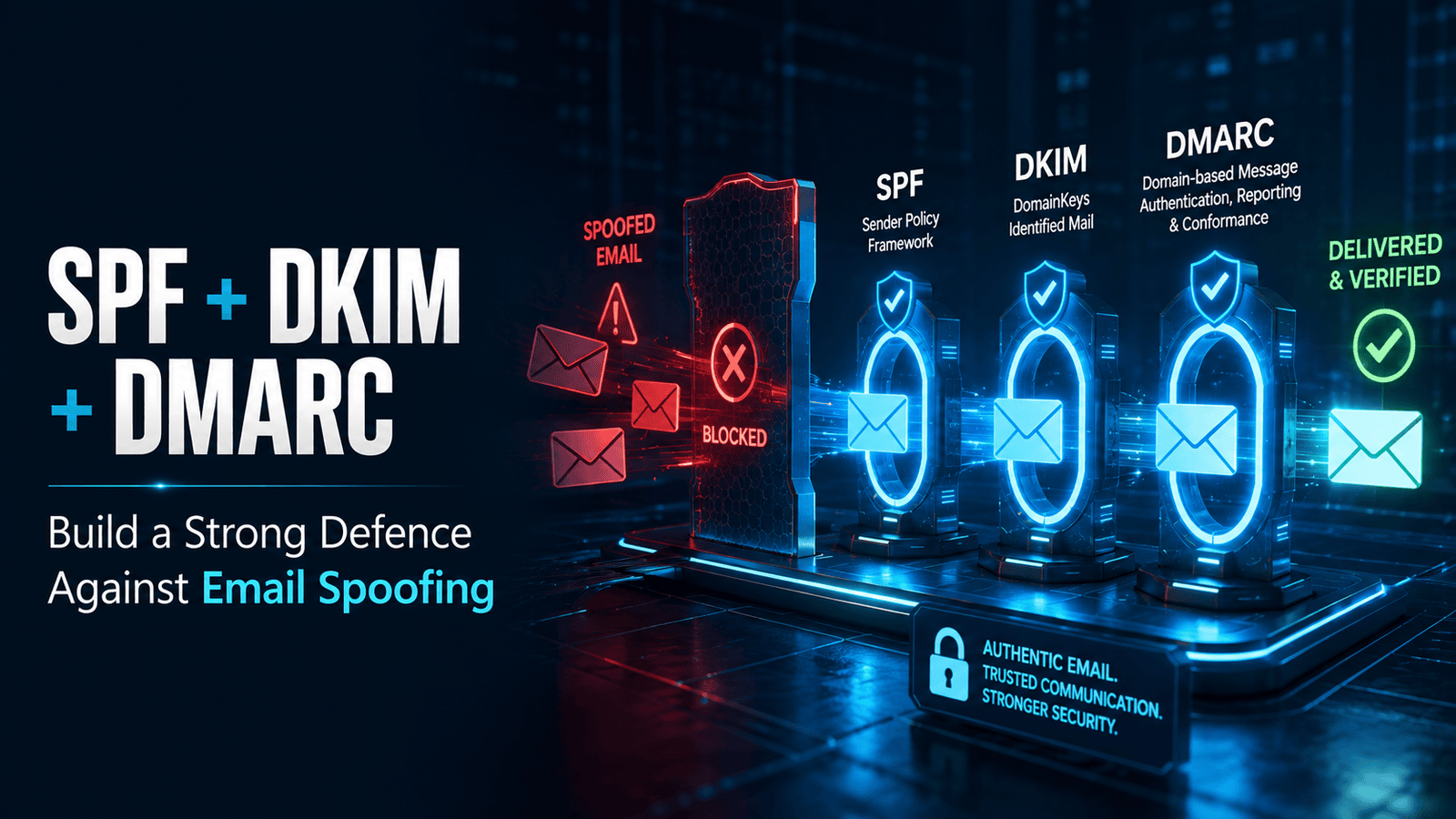
Why Managed Cyber Security Services Are the Smarter Long-Term Solution
For many organizations especially small and mid-sized businesses without a dedicated in-house security team implementing and maintaining all of the above in isolation is a significant challenge. This is where managed cyber security services come in.
Managed cyber security services provide continuous, expert-driven protection that goes beyond what most internal IT teams can sustain alone. Instead of treating spoofing prevention as a one-time project, a managed services partner delivers:
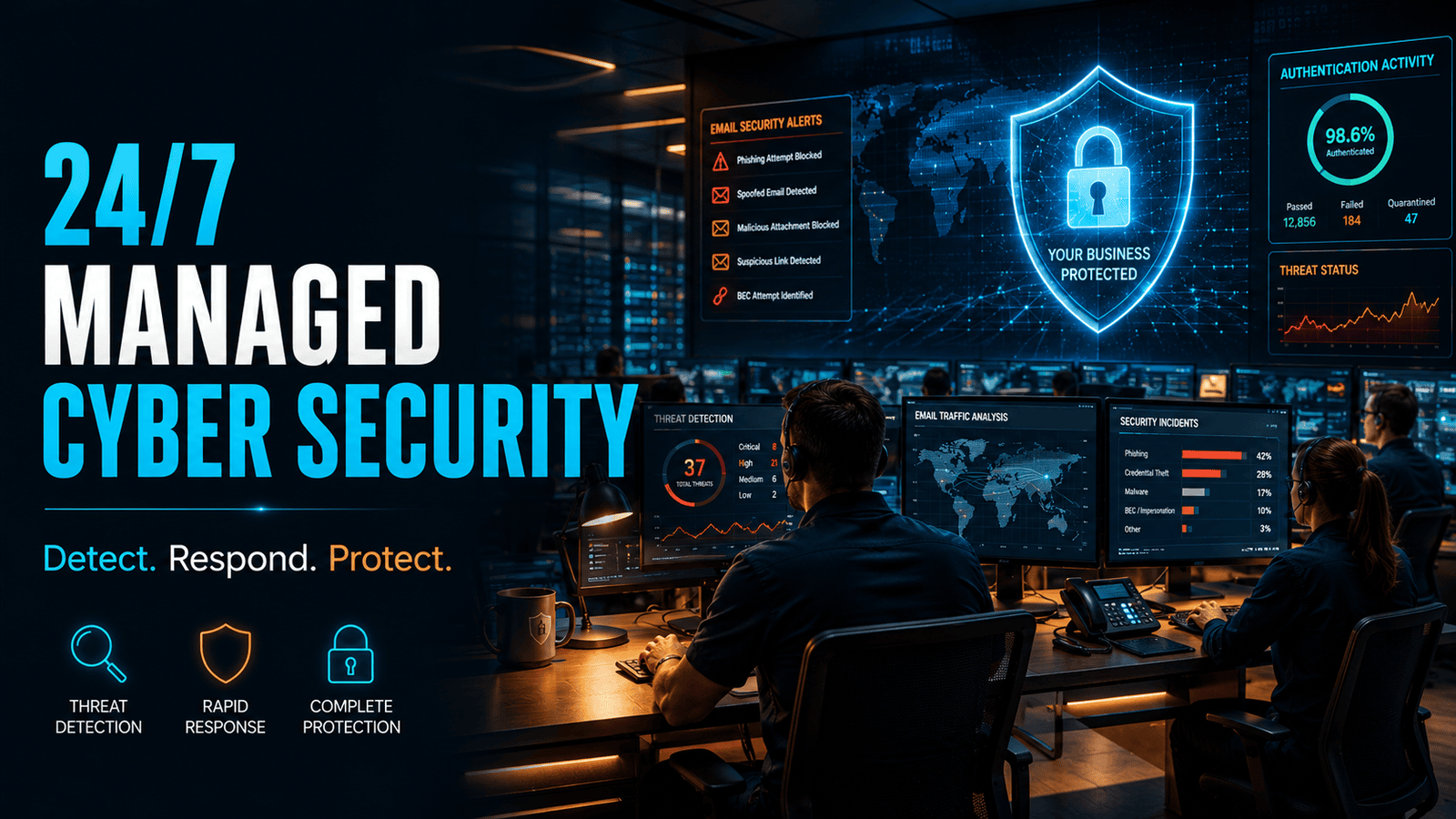
24/7 Threat Monitoring
Cybercriminals don't work business hours. Managed security providers monitor email traffic, network activity, and authentication logs around the clock, catching spoofing attempts and anomalies as they happen rather than after damage is done.
Expert Configuration and Maintenance
Properly setting up SPF, DKIM, and DMARC and keeping them correctly configured as infrastructure changes requires specialized expertise. Managed providers handle this configuration and continuously validate it, closing gaps that often go unnoticed internally for months or years.
Faster Incident Response
When something does slip through, response time matters enormously. Managed security teams have established play books to contain, investigate, and remediate incidents quickly, minimising financial and reputational fallout.
Scalable Protection as the Business Grows
As organizations add employees, vendors, and digital touchpoints, their attack surface grows with them. Managed cyber security services scale protection accordingly without requiring the business to constantly hire and train new internal security staff.
Strategic Business Transformation
Beyond day-to-day defence, a strong managed security partner helps align cybersecurity investment with broader business goals, supporting digital transformation initiatives securely rather than treating security as an afterthought. Delphi's approach to business transformation reflects this philosophy: security and growth working together, not against each other.
For organizations weighing the decision between building an internal security function from scratch versus partnering with experienced providers, the maths often favours managed services, particularly when factoring in the cost of a single successful spoofing-driven breach.
Pros and Cons: Handling Email Spoofing In-House vs. Managed Cyber Security Services
When handling email spoofing, businesses can choose between managing security in-house or using managed cyber security services. In-house handling may have lower upfront tool costs, but it can lead to higher long-term expenses for staffing, training, and security resources. In comparison, managed cyber security services offer a predictable ongoing cost that is often lower than maintaining a full internal security team.
In terms of expertise, in-house security is limited by the skills and availability of internal employees, while managed services provide access to specialized and continuously trained cybersecurity experts. For monitoring, in-house teams may have limited coverage during business hours, whereas managed security services can provide 24/7 monitoring and response.
When it comes to scalability, in-house security often requires additional hiring as the business grows. Managed cyber security services can scale more flexibly according to changing business needs. Incident response may also be slower with an in-house approach if dedicated response play books are not available, while managed services typically use faster, structured response protocols.
Finally, compliance support can require dedicated knowledge and resources when handled internally. Managed cyber security services often include compliance support as part of their offerings, helping businesses address security requirements more efficiently.
Neither approach is inherently "wrong; organizations with mature, well-resourced internal security teams can manage effectively on their own. But for the majority of small and mid-sized businesses, a managed partner closes critical gaps faster and more affordably than building everything from the ground up.
Key Takeaways
Key Takeaways
- Email spoofing is a form of impersonation where attackers forge sender information to appear trustworthy.
- Spoofing can cause financial losses, data breaches, reputational damage, compliance issues, and operational disruption.
- SPF, DKIM, and DMARC are essential email authentication protocols for protecting domains against impersonation.
- Employee awareness and strong internal policies are critical because many spoofing attacks rely on social engineering and urgency tactics.
- Advanced email security gateways can help detect spoofing indicators, malicious links, and suspicious attachments before they reach inboxes.
- Continuous data security management and monitoring are necessary because spoofing prevention is not a one-time task.
- Managed cyber security services provide 24/7 monitoring, expert configuration, faster incident response, and scalable protection.
- Small and mid-sized businesses can benefit from managed security services when maintaining a dedicated in-house security team is challenging.
- Employees should verify unusual payment or data requests through a separate communication channel rather than replying to the suspicious email.
- Regularly reviewing SPF, DKIM, and DMARC configurations, especially after infrastructure changes, helps maintain effective email protection.
Frequently Asked Questions About Email Spoofing
Q. Is email spoofing illegal?
A. Yes. In most countries, email spoofing used to commit fraud, steal data, or impersonate individuals or businesses violates cybercrime and fraud laws. However, prosecution is often difficult due to the anonymous, cross-border nature of these attacks which is exactly why prevention matters more than relying on legal recourse after the fact.
Q. How can I tell if an email is spoofed?
A. Check the actual sender address (not just the display name), look for slight misspellings in the domain, hover over links before clicking, and be cautious of unexpected urgency, especially around financial requests. When in doubt, verify through a separate communication channel.
Q. Can spoofing happen even if my email account was never hacked?
A. Yes. That's the defining characteristic of spoofing: the attacker never accesses your real account. They forge the sender information on a message sent from their own infrastructure, which is why domain-level authentication (SPF, DKIM, DMARC) is essential regardless of individual password strength.
Q. What's the difference between spoofing and phishing?
A. Spoofing refers specifically to forging the sender's identity. Phishing is the broader tactic of tricking someone into revealing information or taking a harmful action. Spoofing is often used as a tool to make phishing emails more convincing.
Q. Do small businesses really need managed cyber security services?
A. Absolutely, arguably more than large enterprises. Small businesses are frequently targeted precisely because attackers assume they lack strong defences. Managed cyber security services level the playing field, providing enterprise-grade protection without requiring an enterprise-sized security budget.
Q. How often should email authentication records be reviewed?
A. At minimum, SPF, DKIM, and DMARC configurations should be reviewed whenever mail infrastructure changes (new vendors, new marketing platforms, new domains) and audited periodically quarterly is a reasonable baseline for most organizations, though continuous monitoring through a managed provider removes the guesswork entirely.Protect your business from email spoofing with expert managed cyber security services. Secure your email and data today with Delphiinfo.com