
The DigitalTransformation Imperative, And Why Security Can No Longer Be an Afterthought
Here is a fact that should capture the attention of every business leader in India: the country's cloud security market generated revenues of USD 1,929.6 million in 2024 and is on course to reach USD 4,959.7 million by 2030, growing at a CAGR of 17.2%. At the same time, the average cost of a data breach in India is projected to hit an all-time high of approximately ₹22 crore in 2025. These two numbers tell a story that we, as organisations navigating the digital economy, cannot afford to ignore, the faster we digitalise, the larger the target we paint on ourselves.
We have entered an era in which ERP (Enterprise Resource Planning), CRM ( Customer Relationship Management ), and cloud infrastructure are no longer peripheral tools. They are the operational backbone of modern Indian enterprises. Whether we are managing supply chains, customer pipelines, financial ledgers, or employee records, these platforms concentrate some of our most sensitive and mission-critical data under one digital roof. That concentration of value is precisely what makes them attractive targets for cybercriminals.
Understanding the ERP and CRM Cloud Boom in India
The Indian ERP market reached USD 1.8 billion in 2024 and is projected to double to USD 3.6 billion by 2033, growing at a CAGR of 7.2%. Globally, the cloud ERP market was valued at USD 65.89 billion in 2025 and is projected to surge to USD 207.59 billion by 2034, at a CAGR of 13.40%. For Indian businesses, from Bengaluru-based SaaS startups to Mumbai's financial institutions, cloud ERP has transitioned from a forward-looking ambition to an operational necessity.
Why the accelerated shift to cloud ERP and CRM? Several drivers are converging simultaneously:
Digital India policy momentum Government-backed digitisation initiatives are pushing enterprises of all sizes toward cloud-first strategies, including the launch of ERP portals for sectors like pharmaceutical exports.
Remote workforce proliferation With an estimated 60 to 90 million Indians projected to work remotely by 2025, cloud-based ERP and CRM systems provide the anywhere-access that distributed teams require.
Real-time decision intelligence Cloud ERP delivers 66% improvement in operational efficiency, 78% productivity gains, and 91% inventory optimisation, according to published research.
CRM integration at scale Modern cloud ERP platforms embed CRM modules directly, enabling seamless management of customer interactions, sales forecasting, and service delivery from a unified platform.
In February 2025, NetSuite expanded its cloud ERP services in India by launching dedicated data centres in Mumbai and Hyderabad, specifically strengthening local data security and regulatory compliance for Indian enterprises. SAP, in collaboration with Indigi Consulting, launched "Grow with SAP", a cloud ERP offering tailored for Indian SMEs. These investments signal global confidence in the Indian market and, more importantly, an acknowledgement that data residency, security, and compliance are central concerns for Indian cloud adopters.
We must, however, confront an uncomfortable reality: as more critical business processes move to the cloud, ERP modules for finance and HR, CRM systems holding thousands of customer records, collaboration tools integrated with cloud storage, the attack surface expands dramatically. And the most exploited entry point into that expanded surface? Email.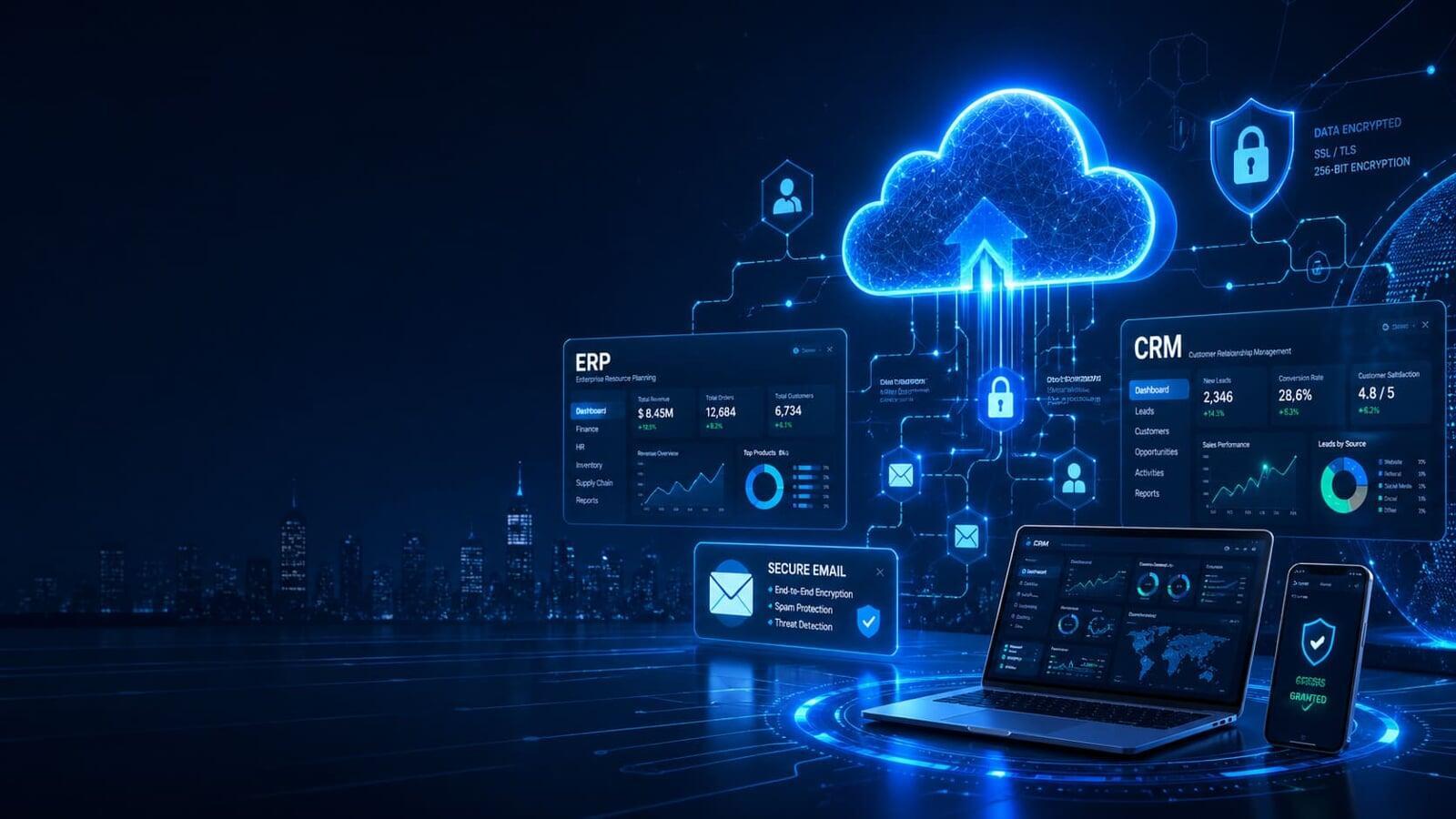
Why Email Remains the Most Dangerous Attack Vector for Cloud-Integrated Businesses
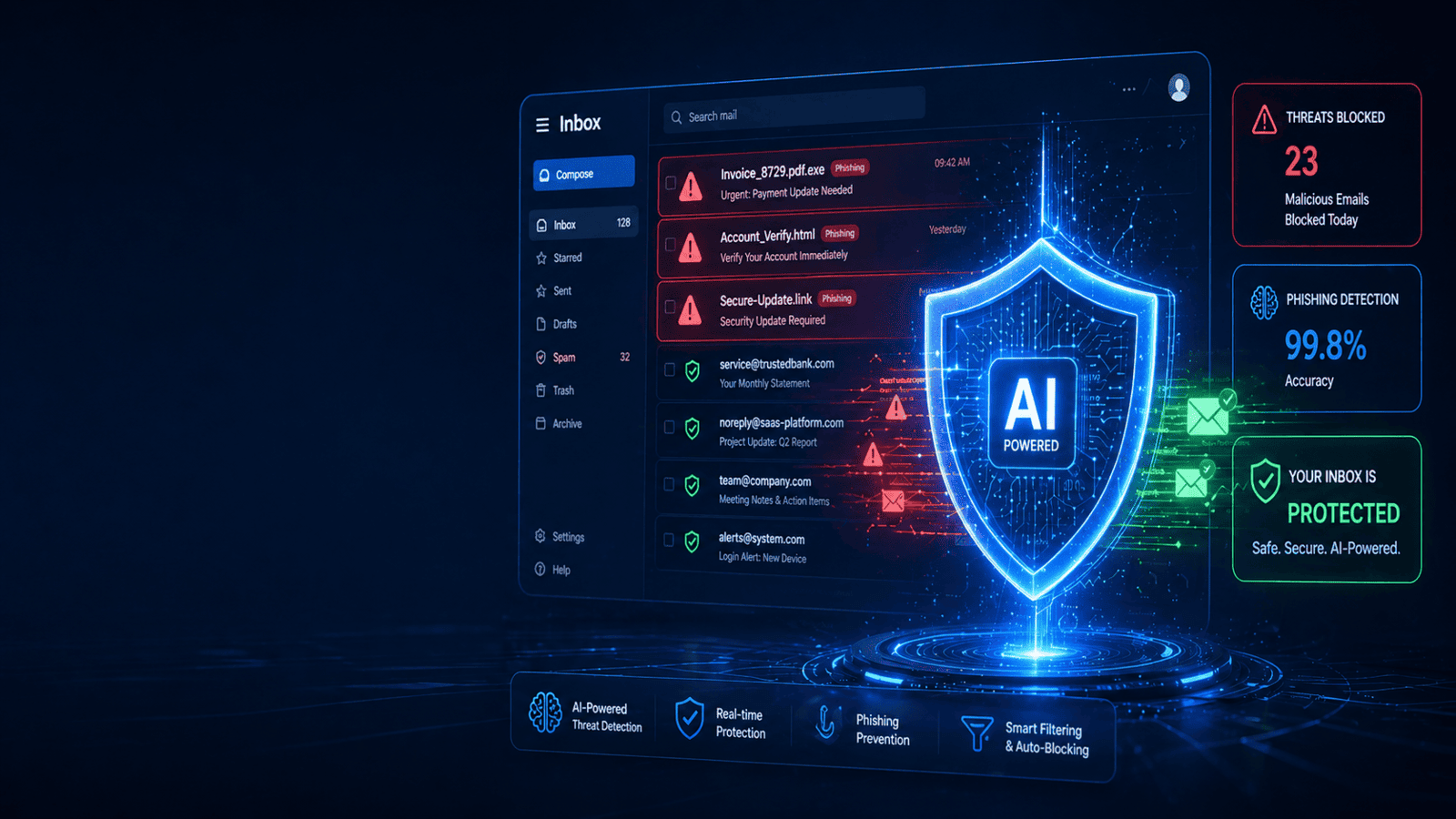
Before we discuss solutions, we must understand the problem with precision. Cybercriminals send an estimated 3.4 billion phishing emails per day worldwide. Email is not merely a communication channel, it is the gateway through which ransomware is deployed, business email compromise (BEC) schemes are executed, and credentials for ERP and CRM platforms are harvested.
For Indian businesses running cloud ERP and CRM systems, the consequences of a successful email attack are exponentially amplified. A compromised email account belonging to a finance manager is not just a privacy breach, it is a potential entry point into SAP, Oracle NetSuite, or Microsoft Dynamics. From there, an attacker can manipulate financial records, exfiltrate customer databases, redirect payment instructions, or deploy ransomware that encrypts the entire ERP environment.
The threat taxonomy that Indian enterprises need to understand includes:
Phishing and spear-phishing Personalised email attacks targeting specific employees, often impersonating vendors, executives, or IT teams.
Business Email Compromise (BEC) Sophisticated fraud schemes where attackers impersonate trusted parties to authorise fraudulent transfers or data disclosures.
Ransomware delivery via email attachments Weaponised documents and links that, once clicked, encrypt files and demand payment.
Zero-day exploits embedded in emails Novel malware variants that evade signature-based detection tools.
QR code phishing An increasingly prevalent attack vector where malicious QR codes embedded in emails bypass traditional link-scanning filters.
Mimecast Email Security: A Deep Dive into Enterprise-Grade Protection
This is where Mimecast becomes a pivotal component of our security architecture. Mimecast is a cloud-native email security platform that has been protecting organisations since 2003, and in 2025 it was recognised as a Leader in the Gartner® Magic Quadrant™ for Email Security, acknowledged for both Completeness of Vision and Ability to Execute. It currently empowers over 40,000 customers worldwide and processes more than 1.7 billion emails daily, leveraging AI and machine learning trained on 7 billion signals per day to identify and neutralise threats.
Mimecast does not replace Microsoft 365 or Google Workspace, it makes those environments significantly harder to exploit. It operates as an intelligent security layer that wraps around existing email infrastructure, inspecting every inbound and outbound message through multiple detection layers before and after delivery.
Core Capabilities That Matter to Indian Enterprises
Targeted Threat Protection (TTP) is Mimecast's flagship anti-phishing module, comprising three powerful components:
URL Protect Every hyperlink in every email is rewritten. When a user clicks, Mimecast scans the destination in real time before permitting access, blocking malicious URLs even if the threat was not present at the time of delivery.
Attachment Protect Suspicious files are detonated in a sandbox environment before reaching the user's inbox. Weaponised attachments are intercepted before execution.
Impersonation Protect Using social graphing and anomaly detection, this module identifies spoofed sender names, lookalike domains, and the subtle linguistic cues that characterise BEC and CEO fraud attempts.
AI-Driven Anomaly Detection goes beyond static rules to identify unusual behavioural patterns detecting social engineering attempts that would evade conventional filters. The platform also offers on-click protection with computer vision capabilities to identify brand impersonation and login-page spoofing, critical defences against credential-harvesting attacks targeting ERP and CRM portals.
Email Security Cloud Integrated (CI) is particularly relevant for Indian businesses already using Microsoft 365. It deploys behind M365, collects emails after they have passed through Microsoft's native security layer, reinspects them, and takes corrective action. Setup takes approximately four minutes, requires no infrastructure changes, and delivers what Mimecast describes as best-in-class efficacy, enterprise-grade protection with minimal administrative burden.
Compliance, Archiving, and Continuity, Mimecast's platform also addresses the regulatory dimension of email security. Its secure email archive preserves messages in a searchable, tamper-resistant format, supporting retention policies, legal hold requirements, and discovery workflows. For Indian enterprises subject to CERT-In mandates, RBI cybersecurity frameworks, and sector-specific compliance requirements, this is not a peripheral feature; it is a regulatory necessity.
Delphi Infotech: India's Trusted Partner for Mimecast and Penetration Testing
Understanding the tools is necessary; deploying them correctly in the context of an Indian enterprise environment is where genuine expertise becomes indispensable. This is where Delphi infotech plays a critical and often underappreciated role.
Founded by alumni of IIT Delhi and BITS Pilani, Delphi Infotech is headquartered in New Delhi and operates as a Value Added Distributor (VAD) of Mimecast in India. The company is positioned as a cybersecurity partner, not merely a software reseller, with capabilities spanning implementation, security operations, vulnerability management, and penetration testing.
As Mimecast's authorised distributor, Delphi Infotech provides Indian organisations with access to the complete Mimecast product portfolio: Email Security with Targeted Threat Protection, Information Protection, Secure Archive, and Mailbox Continuity for Microsoft 365, Microsoft Exchange, and Google Workspace. The company's deep domain knowledge means that deployments are configured for the specific regulatory, operational, and technical contexts that Indian enterprises navigate, not templated implementations designed for generic global markets.
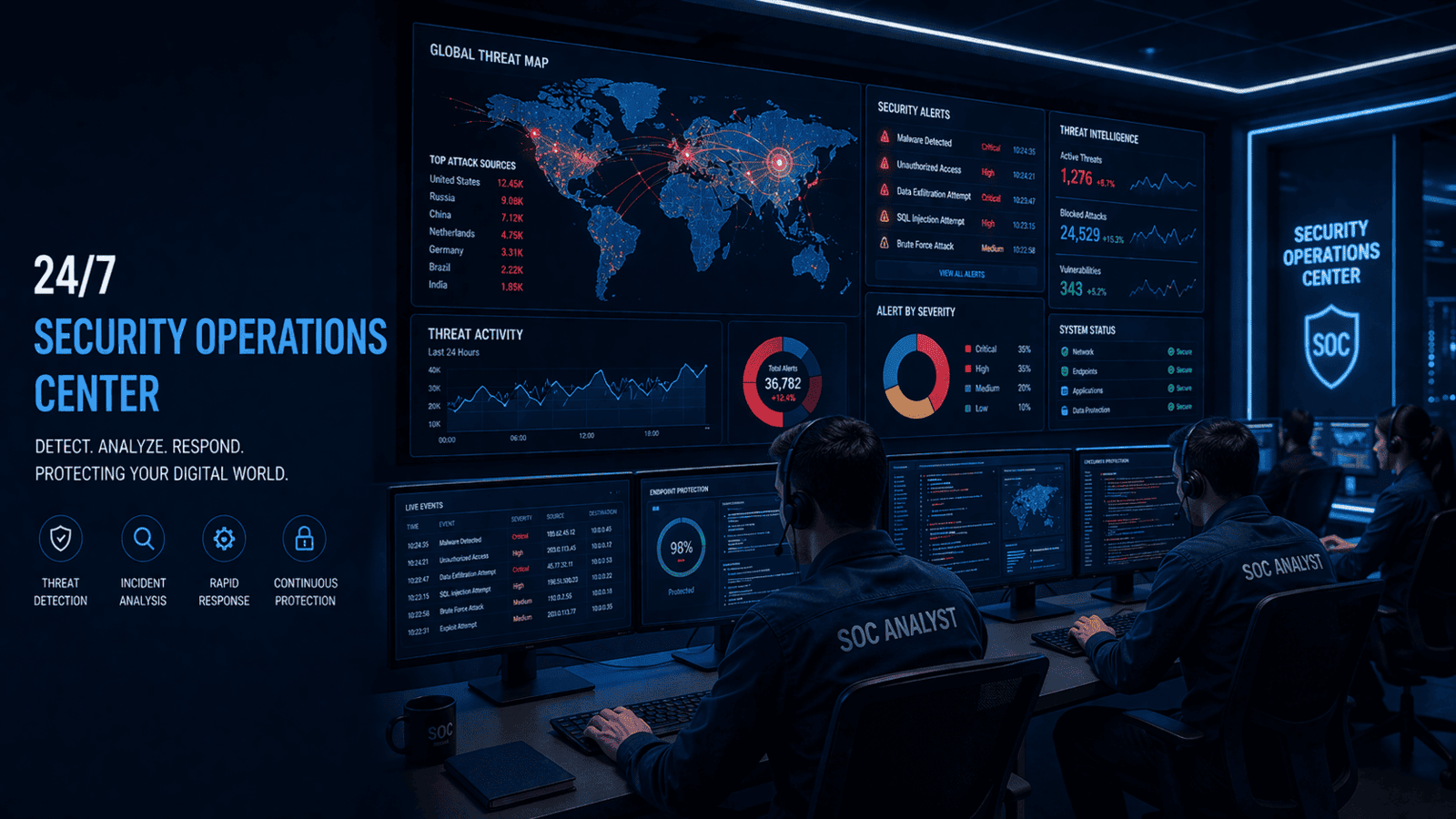
Beyond Mimecast distribution, Delphi Infotech operates a State-of-the-Art Security Operations Centre (SOC) in Delhi, providing 24/7 monitoring, detection, and response capabilities. The SOC is equipped with advanced threat intelligence tools and staffed by skilled analysts who deliver what the company describes as a "vigilant and responsive security team" a proactive defence posture against threats that evolve faster than periodic security reviews can address.
Penetration Testing by Delphi: Simulating the Attacker's Perspective
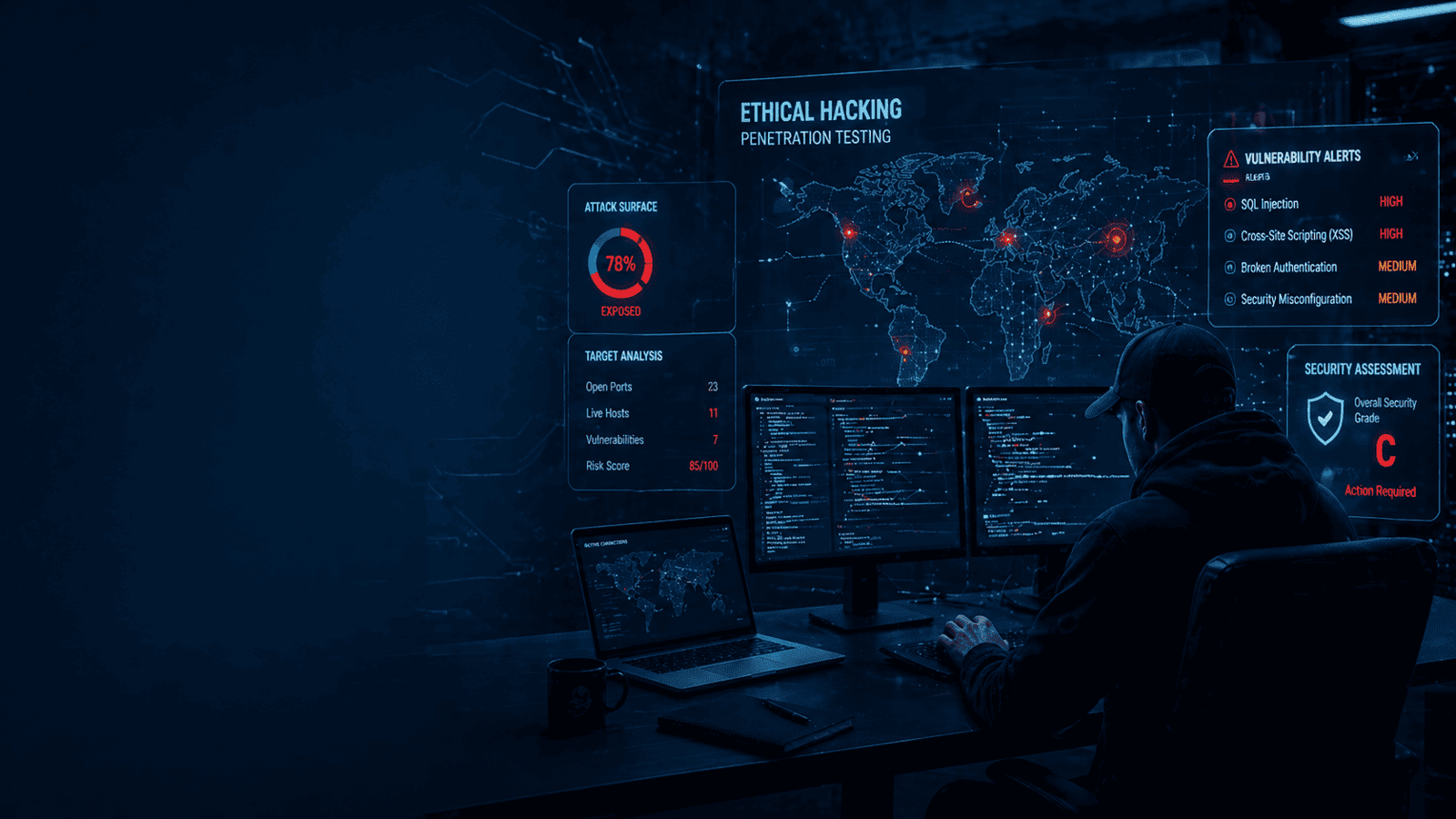
Delphi Infotech's Vulnerability Assessment and Penetration Testing (VAPT) services are a particularly critical component of a comprehensive security strategy for organisations running ERP and CRM systems in the cloud. Their offering includes:
Black Box Penetration Testing, Simulating an external attacker with no prior knowledge of the target environment, identifying vulnerabilities that are exposed to the open internet.
Cloud Penetration Testing Specifically evaluating the security posture of cloud-hosted assets, including ERP and CRM deployments, cloud storage, and identity management configurations.
Network Penetration Testing Analysing network perimeter defences, firewall configurations, and access controls that protect the infrastructure underlying cloud applications.
Vulnerability Management Integration Through partnerships with platforms like TAC Security's ESOF and Vicarius, Delphi Infotech offers not just point-in-time testing but continuous vulnerability management, identifying, prioritising, and remediating weaknesses on an ongoing basis.
Security Awareness Training Recognising that human behaviour remains the most exploited vulnerability, Delphi Infotech also provides employee training programmes designed to reduce the risk of social engineering and phishing success.
Integrating ERP/CRM Cloud Security with Email Defence and Penetration Testing
Let us now examine how these three elements, cloud ERP ,CRM security Mimecast email protection, and Delphi's penetration testing, function as an integrated security architecture rather than isolated tools.
The attack lifecycle typically follows a predictable pattern in the context of cloud ERP environments:
A threat actor crafts a spear-phishing email targeting a finance manager or ERP administrator.
The email contains a malicious link designed to harvest Microsoft 365 credentials.
With those credentials, the attacker gains access to the cloud ERP portal.
The attacker exfiltrates financial data, manipulates payment records, or deploys ransomware.
Mimecast email Security breaks this chain at step two by detecting and neutralising the malicious email before it reaches the user. URL Protect intercepts the credential-harvesting link; Impersonation Protect identifies the spoofed sender; Attachment Protect prevents malicious payloads from executing.
Delphi's penetration testing addresses the broader attack surface, identifying vulnerabilities that exist outside the email channel, misconfigured cloud access policies, unpatched systems, weak network segmentation, or improperly secured API endpoints that connect ERP and CRM systems with third-party applications.
The SOC provides the continuous monitoring layer that ensures threats that evade perimeter controls are detected and contained before they cause material damage.
Key Compliance and Regulatory Considerations for Indian Businesses
India's regulatory landscape around cybersecurity has matured considerably in recent years, and organisations that treat compliance as a box-ticking exercise do so at significant risk.
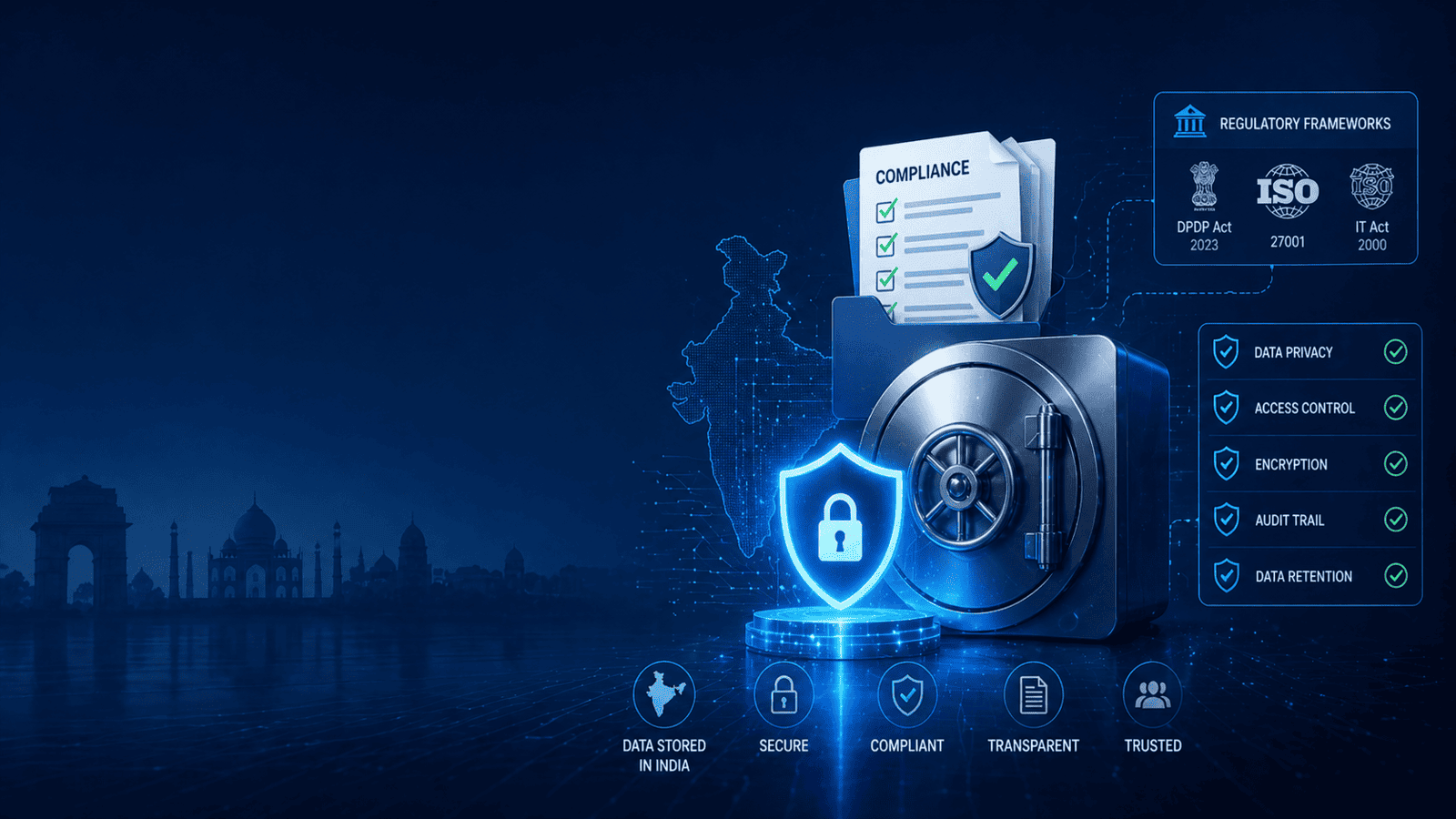
CERT-In (Indian Computer Emergency Response Team) now mandates that organisations report cybersecurity incidents within six hours of detection. This requirement places an enormous premium on having real-time monitoring capabilities, precisely what Delphi's SOC and Mimecast's continuous threat detection provide.
The Digital Personal Data Protection Act (DPDPA) establishes obligations around the protection of personal data that directly implicate CRM systems, which typically store large volumes of customer personal information. A breach of CRM data now carries regulatory consequences that extend well beyond reputational damage.
RBI's Cybersecurity Framework mandates periodic Vulnerability Assessment and Penetration Testing by impaneled auditors for banking and financial services organisations, a legal obligation, not a recommendation. Organisations that have not established a regular VAPT program are, in the most precise sense, non-compliant.
PCI DSS requires quarterly internal vulnerability scans and annual external penetration tests for any organisation handling card payment data, a category that encompasses virtually every retail, hospitality, and e-commerce business running ERP or CRM systems.
Practical Implementation Roadmap: Where Indian Businesses Should Begin
For organisations that recognize the urgency of this security imperative but are uncertain where to begin, we recommend a structured approach:
Phase 1 Assess the Current State: Commission a comprehensive VAPT exercise through a qualified provider such as Delphi Infotech. The assessment should cover email security gaps, cloud ERP access controls, network perimeter defenses, and human risk (via phishing simulation). This baseline assessment reveals the organisation's actual risk posture rather than its assumed one.
Phase 2 Secure the Email Gateway: Deploy Mimecast's email security solution, configured by Delphi Infotech's specialists for the organisation's specific Microsoft 365 or Google Workspace environment. Given that email is the primary attack vector for ERP and CRM compromise, this investment delivers the highest immediate risk reduction per rupee spent.
Phase 3 Implement Continuous Monitoring: Engage Delphi's SOC services to establish 24/7 monitoring of network and email environments. Integrate dark web monitoring to receive early warning of credential exposure.
Phase 4 Operationalise Human Risk Management: Deploy Mimecast's security awareness training, calibrated to the organisation's actual threat data from the email security platform. Ensure that training is continuous, adaptive, and linked to measurable behaviour change rather than periodic completion certificates.
The Business Case: Why Security Investment Pays in the Indian Context
We understand that every security investment competes for budget against revenue-generating priorities. The business case for this investment, however, is straightforward and increasingly compelling.
The average cost of a data breach in India is projected at ₹22 crore in 2025. This figure encompasses direct costs, forensic investigation, regulatory penalties, breach notification, customer remediation, as well as indirect costs: reputational damage, customer churn, and the operational disruption of a compromised ERP system. For an SME operating on thin margins, a breach of this magnitude can be existential.
Against this backdrop, the cost of deploying Mimecast, which, according to market data, ranges approximately between ₹250 and ₹1,000 per user per month depending on the plan and organisation size, and engaging Delphi Infotech for VAPT and SOC services represents not merely a security expenditure but a risk management investment with a quantifiable and favourable return.
Emerging Threats on the Horizon: What We Must Prepare for Next
The threat landscape does not stand still, and neither should our defences. Several emerging trends warrant close attention from Indian enterprises:
AI-Augmented Phishing, Generative AI tools are enabling threat actors to craft spear-phishing emails that are grammatically perfect, contextually accurate, and personalised at scale. The days when phishing could be identified by poor spelling and generic salutations are ending. Mimecast's AI-driven detection capabilities, trained on billions of daily signals — are specifically designed to identify these sophisticated, AI-generated attacks.
QR Code Phishing (Quishing), As traditional URL-based phishing detection has improved, attackers have shifted to embedding malicious QR codes in emails, bypassing link-scanning filters. Mimecast's on-click protection with computer vision capabilities addresses this vector, scanning QR code destinations in real time.
Cloud-Native Attack Patterns, As more organisations move ERP and CRM systems to the cloud, attackers are developing attack methodologies specifically targeting cloud APIs, misconfigured storage buckets, and over-privileged service accounts. Delphi's cloud penetration testing services are designed to identify precisely these vulnerabilities before attackers can.
Key Takeaways
Before we conclude, let us distil the most important insights from this discussion:
India's ERP market is growing at a CAGR of 7.2%, reaching USD 3.6 billion by 2033 this growth significantly expands the attack surface that Indian organisations must protect.
Email is the primary attack vector for ERP and CRM compromise; securing the email environment is the single highest-impact security investment most Indian organisations can make.
Mimecast, as a 2025 Gartner Magic Quadrant Leader for Email Security, provides enterprise-grade, AI-driven protection covering phishing, BEC, ransomware, zero-day threats, QR code phishing, and compliance archiving all from a unified cloud-native platform.
Delphi Infotech is India's authorised Value Added Distributor of Mimecast and a comprehensive cybersecurity partner offering VAPT services, a 24/7 SOC, dark web monitoring, vulnerability management, and security awareness training.
Penetration testing is not optional for Indian organisations subject to CERT-In, RBI, SEBI, and PCI DSS compliance requirements, it is a regulatory mandate with legal consequences for non-compliance.
Defence in depth combining email security, penetration testing, continuous monitoring, and human risk management, is the only architecture robust enough to protect cloud ERP and CRM environments against modern, multi-vector attacks.
The average cost of a data breach in India (₹22 crore) vastly exceeds the cost of proactive security investment, making the business case for comprehensive cybersecurity unambiguous.
Conclusion
The digital transformation of Indian business is not a future event, it is happening now, at pace, across every sector of the economy. Cloud ERP systems are streamlining operations from Mumbai's financial district to Pune's manufacturing corridors. CRM platforms are managing customer relationships for businesses from Bengaluru's tech unicorns to Delhi's traditional trading houses. This transformation is overwhelmingly positive, unlocking efficiency, scalability, and competitive capability that was previously accessible only to the largest organisations.
But transformation without protection is vulnerability at scale. Every new cloud workload, every ERP module deployed, every CRM integration activated increases the organisation's exposure to an adversary community that is increasingly sophisticated, well-resourced, and specifically targeting the email environments and cloud platforms that Indian businesses depend upon.
The combination of Mimecast's advanced email security and Delphi Infotech's penetration testing and SOC capabilities represents a coherent, proven response to this challenge. Mimecast addresses the most exploited attack vector, email, with AI-powered, multi-layered defences that scale from SMEs to large enterprises. Delphi Infotech brings the local expertise, regulatory knowledge, and implementation capability to translate those defences into robust protection in the Indian enterprise context.
Frequently Asked Questions (FAQ)
Q: What is the difference between ERP and CRM, and why do both require strong security?
A: ERP (Enterprise Resource Planning) manages internal business processes, finance, HR, supply chain, inventory, while CRM (Customer Relationship Management) manages external customer interactions, sales pipelines, and service delivery. Both systems hold highly sensitive data: ERP contains financial records and employee information, while CRM contains customer personal data and commercial intelligence. A breach of either system can carry regulatory penalties, financial losses, and reputational damage. Because both are increasingly cloud-hosted and often accessible via web interfaces, they are attractive targets for attackers who exploit email phishing to harvest access credentials.
Q: Why is Mimecast considered a superior email security solution compared to native Microsoft 365 or Google Workspace security?
A: Microsoft 365 and Google Workspace include built-in email filtering, but these native tools are designed for broad general protection rather than advanced threat specialisation. Mimecast adds a dedicated, AI-trained layer that inspects emails after they have passed through native security — catching sophisticated attacks, zero-day threats, BEC attempts, and QR code phishing that native filters routinely miss. The February 2025 update to Mimecast's Cloud Integrated deployment specifically improved efficacy to be genuinely competitive with gateway-grade protection, and the platform's recognition in the 2025 Gartner Magic Quadrant reflects this advanced capability.
Q: What types of penetration testing does Delphi Infotech provide, and how often should organisations conduct them?
A: Delphi Infotech offers black box penetration testing (external attacker perspective), cloud penetration testing (specifically targeting cloud-hosted assets including ERP and CRM), network penetration testing (evaluating perimeter defences), and comprehensive VAPT exercises that combine vulnerability assessment with penetration testing. Regulatory frameworks provide useful guidance on frequency: RBI mandates periodic VAPT for financial institutions; PCI DSS requires quarterly internal scans and annual external penetration tests; CERT-In requirements effectively mandate continuous monitoring with incident response capability. As a general best practice, organisations should conduct a comprehensive penetration test at minimum annually, with quarterly vulnerability assessments.
Q: Is Mimecast email security suitable for Indian SMEs or is it primarily for large enterprises?
A: Mimecast is designed to serve organisations across the size spectrum. The Cloud Integrated (CI) deployment option is specifically positioned for small and mid-size businesses, offering enterprise-grade protection with minimal infrastructure requirements, setup time of approximately four minutes, and out-of-the-box configurations that deliver immediate security value without requiring dedicated security operations staff. As an authorised distributor of Mimecast in India, Delphi Infotech can help Indian SMEs identify the appropriate plan tier for their size and budget, and configure the solution for their specific environment.
Q: How does dark web monitoring relate to ERP and CRM security?
A: Dark web forums and marketplaces are where cybercriminals trade stolen credentials, corporate data, and access to compromised systems. If an employee's corporate email credentials are harvested in a third-party data breach, those credentials are frequently sold on the dark web before being used to access corporate systems, including cloud ERP and CRM platforms. Delphi Infotech's SOC includes dark web monitoring as part of its managed security service, enabling organisations to receive alerts when their credentials or sensitive data appear in dark web marketplaces, allowing them to invalidate compromised credentials before attackers can weaponise them.
Q: What compliance frameworks are most relevant to Indian businesses implementing cloud ERP and CRM security?
A: The primary compliance frameworks relevant to Indian enterprises include CERT-In's cybersecurity directions (mandatory 6-hour breach reporting), the Digital Personal Data Protection Act (DPDPA) for organisations processing personal data, RBI's Cybersecurity Framework for financial institutions (mandating VAPT by empanelled auditors), SEBI's Cybersecurity and Cyber Resilience Framework for capital markets participants, and PCI DSS for organisations processing card payment data. ISO 27001 certification, while not mandated by Indian law, is increasingly required by enterprise customers and multinational partners as evidence of security maturity. Delphi Infotech's VAPT reports are designed to provide the audit-ready documentation that these compliance frameworks require.
Q: How does phishing simulation training integrate with Mimecast's email security platform?
A: Mimecast's Human Risk Management Platform combines threat detection with adaptive security awareness training. The platform uses data from the email security layer, including which users clicked on phishing simulation emails, which individuals receive the most targeted attacks, and which behavioural patterns indicate elevated human risk, to drive personalised training interventions. Rather than treating security awareness as an annual compliance exercise, this approach creates a continuous feedback loop in which actual risk data drives targeted training, and training outcomes are measured through subsequent phishing simulation results. Delphi Infotech can help organisations configure and manage this integrated training programme as part of a comprehensive human risk management strategy.