
Discover how AI strengthens data security management and compliance monitoring, cutting breach costs while closing critical governance gaps
Every business today runs on data. Customer records, financial transactions, employee files, and product designs all quietly power daily operations. As that data grows, so does the pressure to protect it. Regulators are tightening rules, cybercriminals are getting smarter, and a single exposed database can cost an organization millions of dollars in fines, lawsuits, and lost trust. Naturally, more companies are turning to artificial intelligence to help solve this problem. But can a machine really be trusted with something as sensitive as your organization's security posture and its standing with regulators?
Why Data Security Management Has Become a Boardroom Priority
Data protection used to be treated as an IT problem, something handled quietly in a server room. That is no longer the case. According to IBM's 2025 Cost of a Data Breach Report, the global average cost of a breach fell to 4.44 million dollars, the first decline in five years, largely because AI-powered detection tools helped organizations contain incidents faster. Yet in the United States, average breach costs actually climbed to 10.22 million dollars, driven by regulatory penalties and slower response times in complex environments. The takeaway is simple: the cost of getting security and compliance wrong is rising, even as the tools to get it right are improving.
At the same time, regulatory frameworks such as the GDPR in Europe, HIPAA in healthcare, and India's own Digital Personal Data Protection Act have raised the bar for how organizations must handle personal and sensitive information. Boards and executives are now directly accountable for data governance failures, not just the security team. This is exactly why effective data security management has moved from a technical checklist to a strategic priority that touches legal, operations, and customer trust all at once.

How AI Is Changing the Face of Data Security Management
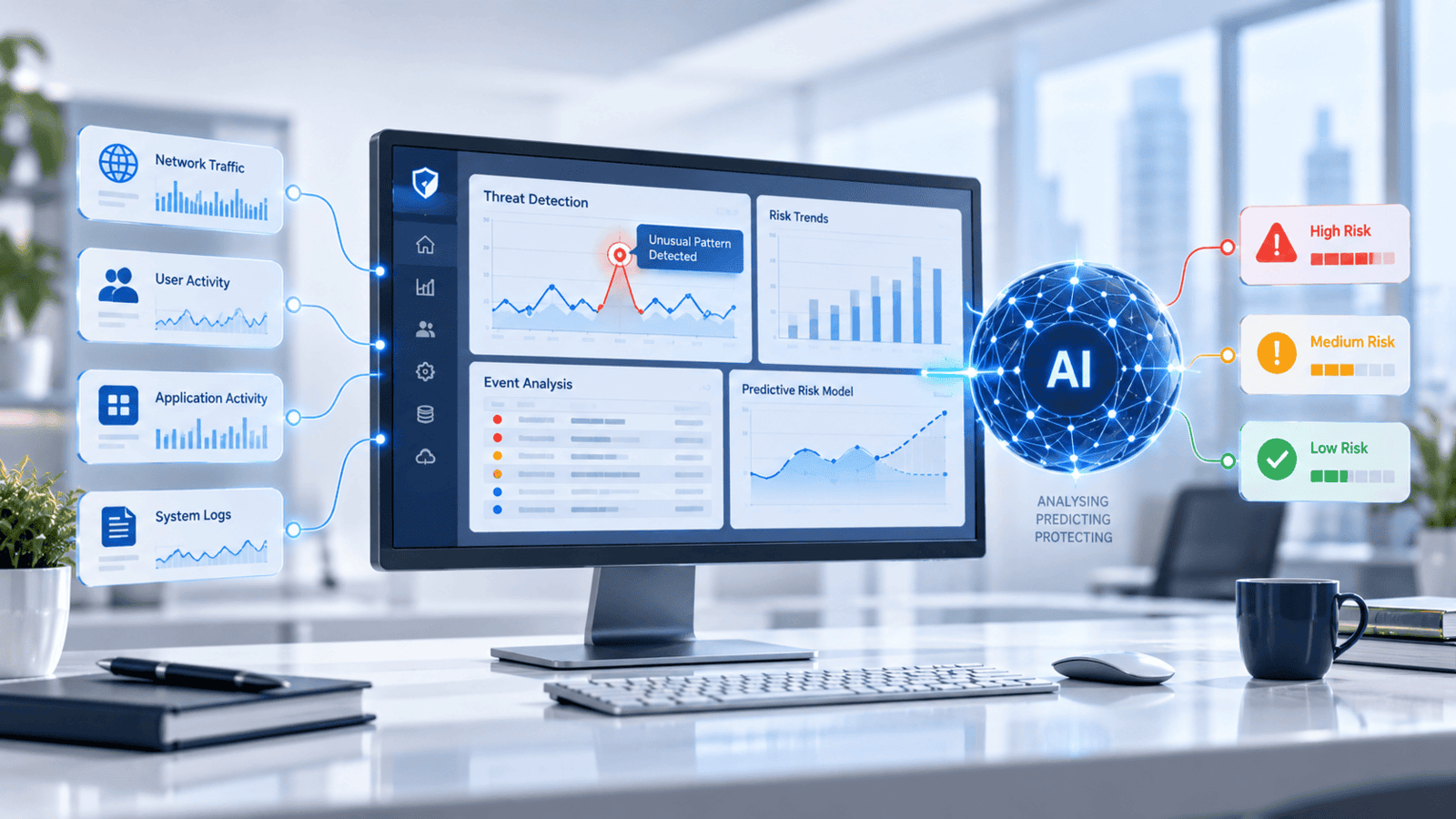
Artificial intelligence has moved well beyond spam filters and basic antivirus software. Modern security platforms use machine learning to study patterns of normal behavior across networks, applications, and user accounts, then flag anything that deviates from that baseline. This shift from static, rule-based defenses to adaptive, learning systems is arguably the biggest change in enterprise security in the last decade.
Faster Threat Detection and Response
Predictive Risk Modeling
Beyond reacting to threats, AI is increasingly used to anticipate them. By analyzing historical incident data, software vulnerabilities, and even dark web chatter, machine learning models can score which systems, vendors, or data sets carry the highest risk of compromise. This lets security teams prioritize limited time and budget on the gaps that matter most instead of fixing everything at once, which is rarely realistic in a large organization with thousands of endpoints and applications.
Automating Compliance Monitoring
The Compliance Side: Can AI Really Keep You Audit-Ready?
Being audit-ready traditionally meant weeks of scrambling to gather evidence, screenshots, and sign-offs before an assessor arrived. AI is changing that expectation. Continuous monitoring tools now generate audit trails automatically as controls are tested in real time, which means the evidence an auditor needs is already organized and current rather than reconstructed under deadline pressure. This is a meaningful improvement, particularly for mid-sized organizations that do not have large dedicated compliance teams.
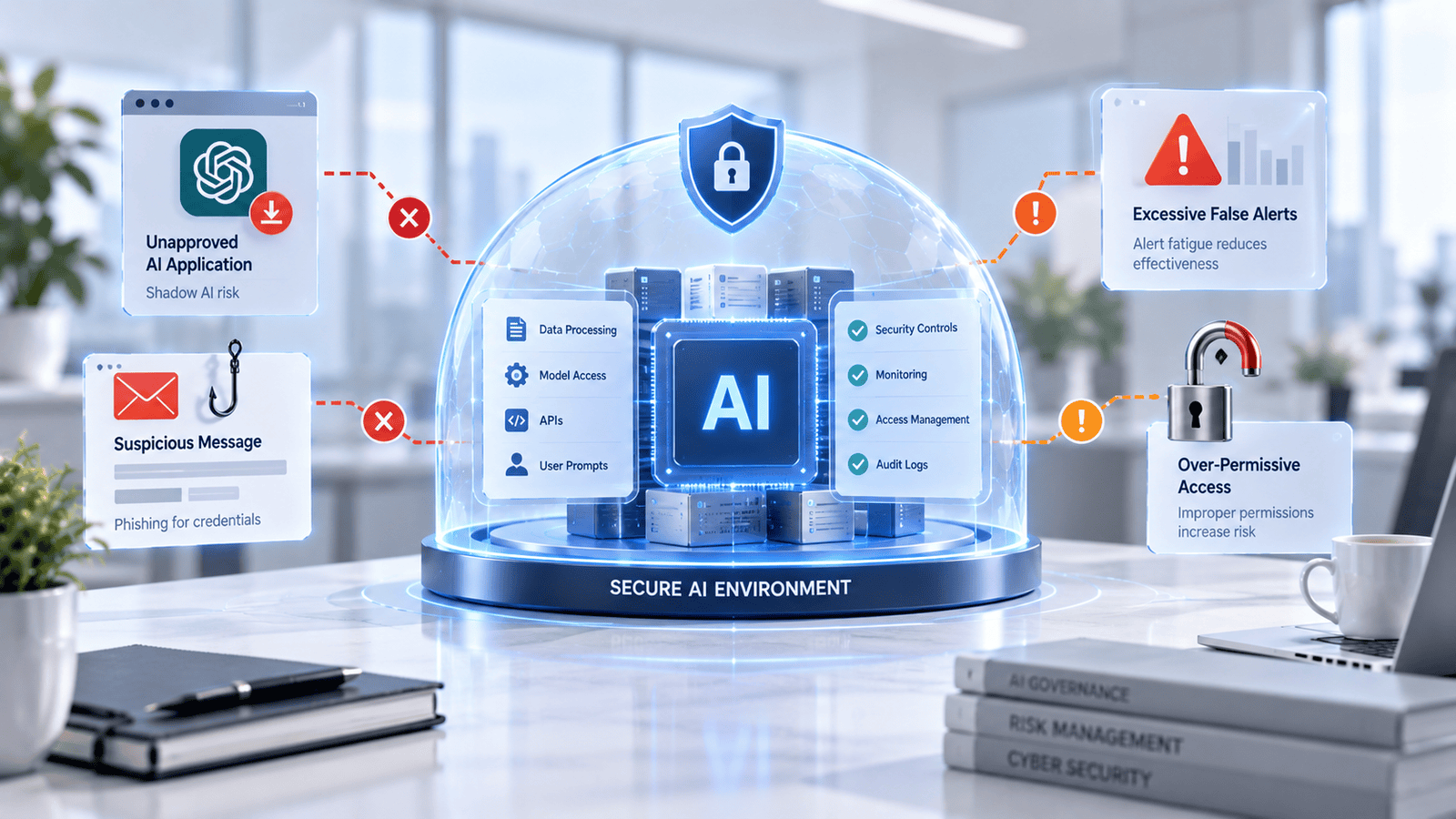
That said, AI's usefulness for compliance depends heavily on how well it is governed. IBM found that 63 percent of breached organizations either had no formal AI governance policy or were still developing one, and among those that did have a policy, only about a third performed regular audits of unsanctioned AI tools. In other words, the technology that is supposed to strengthen AI security and compliance can itself become a liability if it is deployed without proper oversight, access controls, and clear ownership. Compliance readiness, then, is not just about having AI tools; it is about having the governance structure to use them responsibly.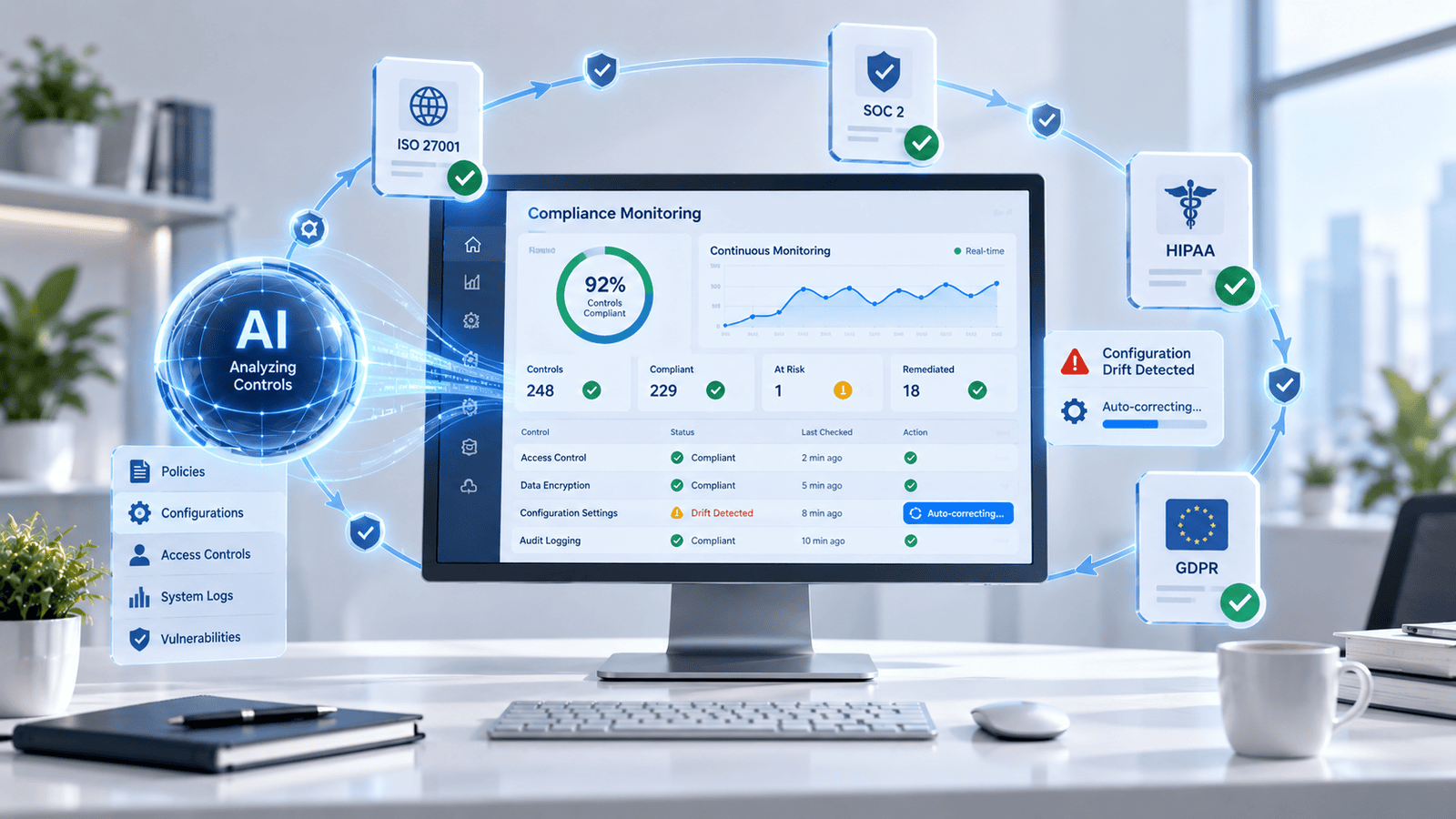
Real-World Examples: AI in Action for Security and Compliance
The value of AI in this space becomes clearer when you look at how it plays out in practice. In 2025, a wave of attacks attributed to the group known as Scattered Spider hit several major British retailers, including Marks & Spencer, the Co-operative Group, and Harrods, disrupting operations for weeks. These incidents underscored how quickly attackers can exploit gaps in identity verification and third-party access, the exact kind of behavioral anomaly that AI-driven monitoring is designed to catch before it escalates into a full-blown crisis.
Where AI Falls Short: The Risks You Shouldn't Ignore
AI is not a silver bullet, and pretending otherwise is itself a security risk. Attackers are using the same technology that defends organizations to attack them. IBM's 2025 findings show that AI-powered techniques, including highly convincing phishing emails and deepfake voice or video impersonation, contributed to roughly 16 percent of breaches studied. Even more concerning, unauthorized or unsanctioned AI tools, often called shadow AI, were linked to about 20 percent of breaches, and these incidents cost organizations an average of 670,000 dollars more than typical breaches because they took longer to detect and often exposed sensitive data across multiple systems at once.
Building a Human + AI Approach to Data Security Management
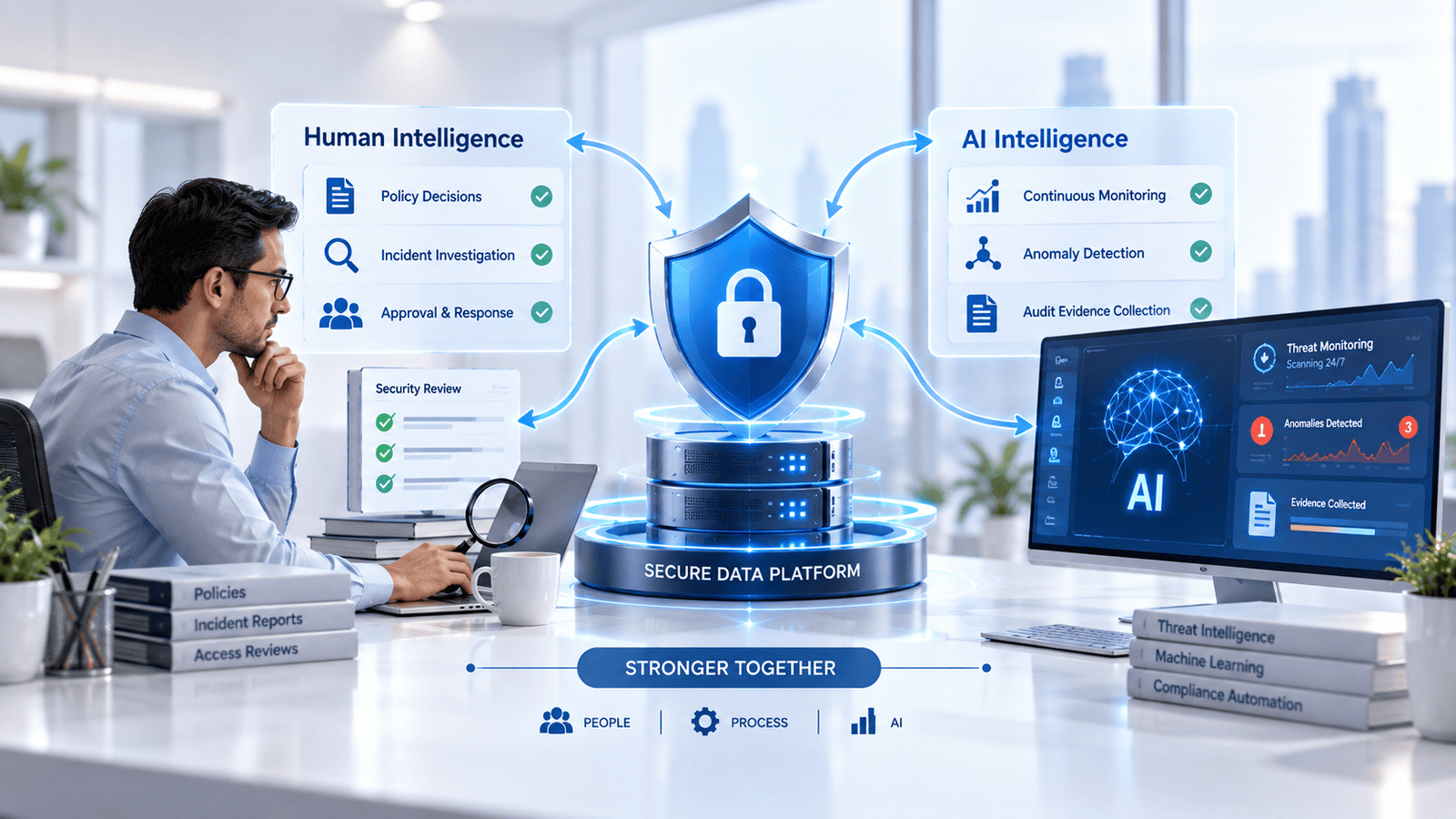
The organizations getting the best results are not choosing between AI and human expertise; they are combining both deliberately. A sound approach usually starts with a clear inventory of what data exists, where it lives, and who can access it since AI tools are only as effective as the visibility they are given. From there, AI can be layered in to handle continuous monitoring, anomaly detection, and evidence collection for audits, while human teams retain responsibility for setting policy, investigating flagged incidents, and making judgment calls that require context a model simply does not have.
Weighing the Benefits Against the Limitations
It helps to step back and weigh AI's advantages against its limitations honestly rather than treating it as either a cure-all or a threat to avoid. On the benefit side, AI genuinely shortens the gap between when an intrusion happens and when it is discovered, turns compliance from a once-a-year fire drill into an ongoing, evidence-backed process, and frees up skilled security professionals to focus on judgment-heavy work instead of manually sifting through log files. It also scales in a way manual review cannot, since a model can watch millions of events across a global network simultaneously, something no human team could realistically do around the clock.
Frequently Asked Questions
Q: Can AI fully replace a human security team?
A: No. AI is extremely effective at processing large volumes of data and spotting patterns quickly, but it lacks the contextual judgment needed to investigate incidents, interpret intent, or make policy decisions. The strongest programs use AI to extend the reach of a human team rather than to replace it.
Q: Is using AI itself compliant with privacy regulations like GDPR?
A: It can be, but it is not automatic. Regulations such as GDPR require organizations to understand what data an AI system processes, why, and with what safeguards. Using AI without documenting this can itself create a compliance gap, which is why governance policies around AI use are just as important as the technology.
Q: How exactly does AI help with compliance monitoring?
A: AI-driven platforms continuously compare an organization's actual configurations, access logs, and controls against the requirements of a given framework, flagging deviations as they occur instead of waiting for a scheduled audit. This produces a running record of evidence that is far easier to present during a regulatory review.
Q: What is shadow AI, and why does it matter?
A: Shadow AI refers to AI tools employees use without formal approval or oversight from IT or security teams. Because these tools operate outside established controls, they were linked to roughly 20 percent of breaches in IBM's 2025 research and tend to be more costly and slower to detect than sanctioned tools.
Q: Does AI actually reduce the cost of a data breach?
A: Evidence suggests it does when deployed responsibly. Organizations using AI and automation extensively across security operations reduced their average breach lifecycle by about 80 days and saved close to 1.9 million dollars compared to organizations with little or no AI-driven automation.
Q: What should a company check before adopting AI for security and compliance?
A: Examine how the vendor handles data residency, access controls, and model training practices, and confirm the tool integrates with your existing compliance frameworks rather than creating a separate, disconnected system. It also helps to pilot the tool on a smaller scope before rolling it out organization-wide.Key Takeaways
AI + human oversight drives real savings: Effective data security management now depends on combining AI-driven detection with strong human oversight. Organizations that use AI and automation extensively cut breach costs by close to $1.9 million on average while containing incidents roughly 80 days faster.
Compliance is becoming continuous, not periodic: The shift is moving away from once-a-year audits toward continuous compliance monitoring, which produces ready-made evidence trails and eliminates the last-minute scramble that has traditionally defined audit season.
Shadow AI is the real threat, not AI itself: Ungoverned or unsanctioned AI use was tied to roughly one in five breaches and added hundreds of thousands of dollars in additional cost, making clear ownership, access controls, and audit policies for AI security just as important as the tools themselves.
Governance beats a stand-alone fix: Organizations that treat AI as one part of a well-governed program, rather than a quick patch, are best positioned to stay both secure and audit-ready in the years ahead.
If your organization is ready to move from reactive fixes to a governed, AI-supported approach to risk and compliance, delphiinfo.com can help you get there.