
What are the best email security solutions for small businesses? Delphi Infotech breaks down features, pricing, and deployment for SMBs, protect your inbox today.
Your inbox is where attackers strike first. If you have been asking "What are the best email security solutions for small businesses?", you are asking the right question at the right time. According to NordPass, up to 43% of all cyberattacks now target small businesses, yet most owners are still running the default protections that came bundled with their email provider. This article walks through what you actually need, which features matter most at the SMB level, how pricing works across solution tiers, and how Delphi Infotech helps you build a protection strategy that fits your budget and team.
Email is not just a communication channel; it is the nervous system of your business. Every invoice approval, vendor negotiation, client proposal, and payroll instruction flows through it. That makes it the single most valuable target for cybercriminals, and unfortunately, the most commonly underprotected one in small business environments.

Why Email Is the Biggest Risk Vector for Small Businesses
Email is the most exploited entry point into any business network. The average cost of a Business Email Compromise (BEC) attack is $134, 952 per organization, a figure that can end a small business outright. This staggering number comes from the FBI's Internet Crime Complaint Center (IC3) and is corroborated by research from Barracuda Networks.
Small businesses face a compounding risk: limited IT staff, shared credentials, and a heavy reliance on email for financial approvals, vendor communication, and client data. Attackers know this, and they count on it. A single well-crafted phishing email can compromise payroll, redirect a wire transfer, or expose an entire client database.
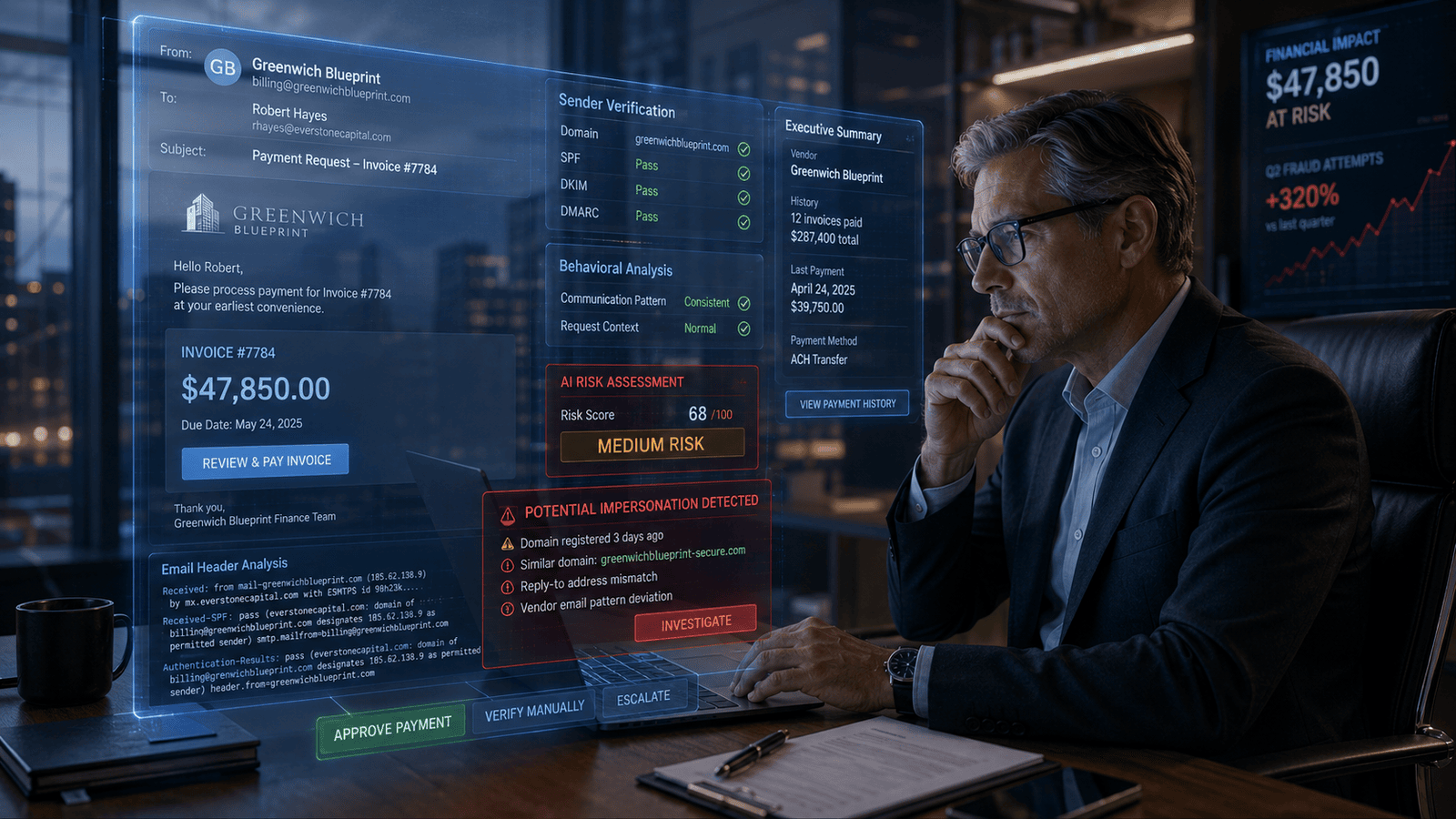
Consider what this looks like in practice. An attacker spends two weeks monitoring your public-facing email patterns, who sends invoices, who approves payments, and which vendors you use. They then craft a perfectly timed message appearing to come from your CFO or a known supplier, requesting an urgent wire transfer. Without the right controls in place, that email reaches an employee who has no reason to question it.
Key Statistic
43% of cyberattacks target small businesses, yet the majority operate with only default email protections. One successful BEC attack averages $134, 952 in direct losses, enough to permanently damage or close most small businesses.
What Features Actually Matter for Small Businesses
Not every feature marketed to large enterprises matters for a 20-person team. The right email security features for small businesses are the ones that compensate for limited IT bandwidth, automation, fast alerts, and remediation that does not require a dedicated analyst to trigger. Here is a breakdown of the features that deliver real protection at the SMB level:
1. Anti-Phishing and Impersonation Protection
This stops emails that spoof your vendors, bank, or executives. These attacks bypass basic spam filters because they do not contain malware; they contain convincing lies. Modern anti-phishing engines use machine learning to analyze message behavior, sender history, and content patterns to catch what rule-based filters miss.
2. Sender Authentication Enforcement (SPF, DKIM, DMARC)
These three protocols work together to tell the world which mail servers are authorized to send email on your behalf. Without enforcement:
SPF, without it, anyone can forge your sending domain
DKIM, without it, message integrity cannot be verified in transit
DMARC, without it, there is no policy governing what happens to unauthenticated emails from your domain
Together, they form the technical backbone of anti-spoofing defense.
3. Data Loss Prevention (DLP)
DLP flags outbound emails that contain sensitive data, Social Security numbers, credit card details, proprietary files, or HIPAA-regulated health information. Delphi Infotech's Data Loss Prevention Solutions give small businesses the same outbound controls that enterprise compliance teams rely on, without the complexity.
4. Multi-Factor Authentication (MFA) Integration
Even if a password is stolen, MFA means an attacker cannot access the account without a second verification factor. This is one of the highest-ROI controls any small business can implement; it blocks the overwhelming majority of credential-based account takeover attempts.
5. Encryption for Sensitive Communications
Email encryption protects messages carrying financial details, HR information, or client data, both in transit and at rest. For businesses handling regulated data, encryption is not optional; it is a compliance requirement.
6. Incident Containment Tools
These allow you to retract a sent email, quarantine a suspicious message across all inboxes simultaneously, or audit who accessed what and when. When a security incident occurs, minutes matter, and these tools dramatically reduce response time.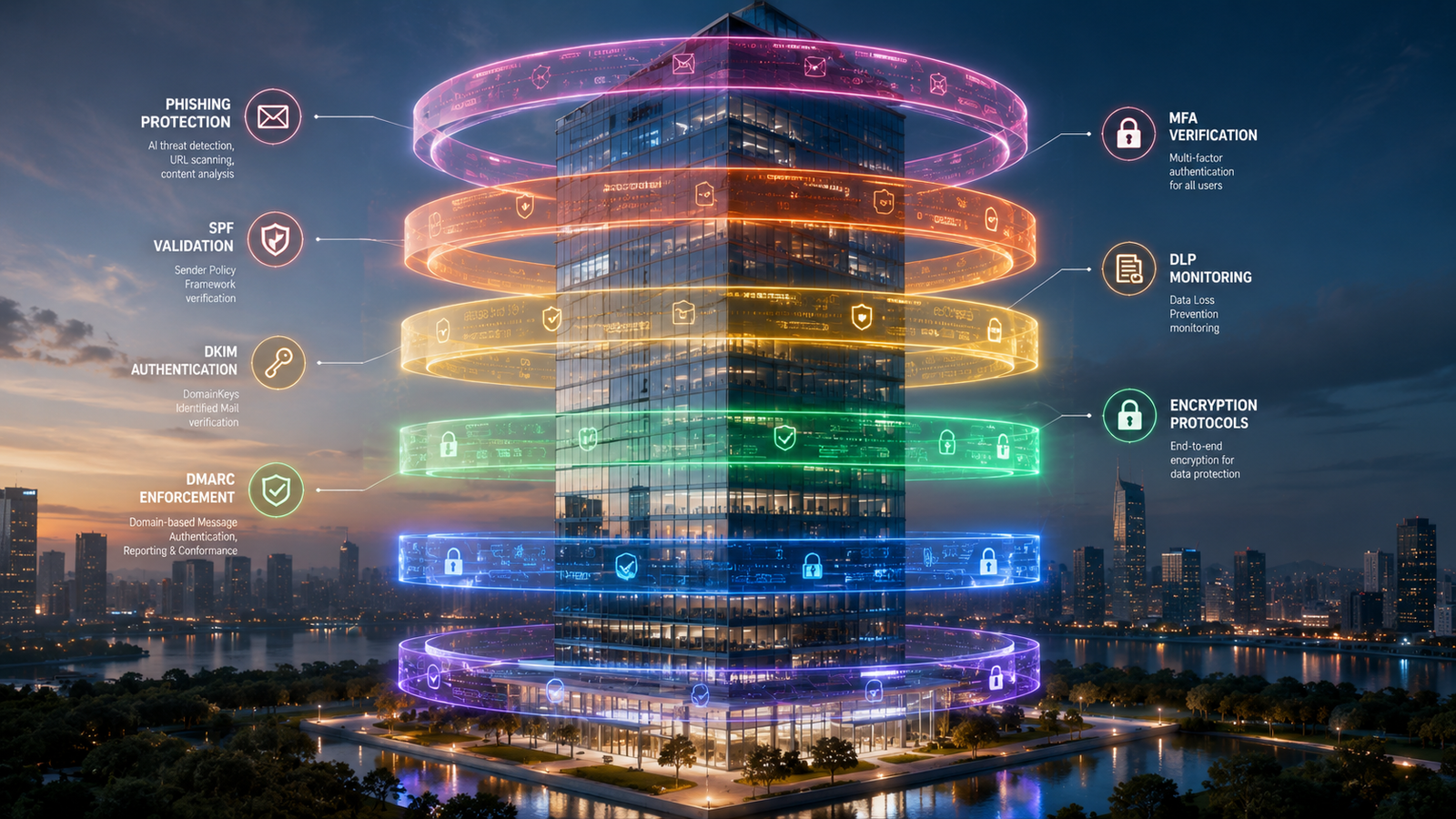
How Email Security Solutions Work
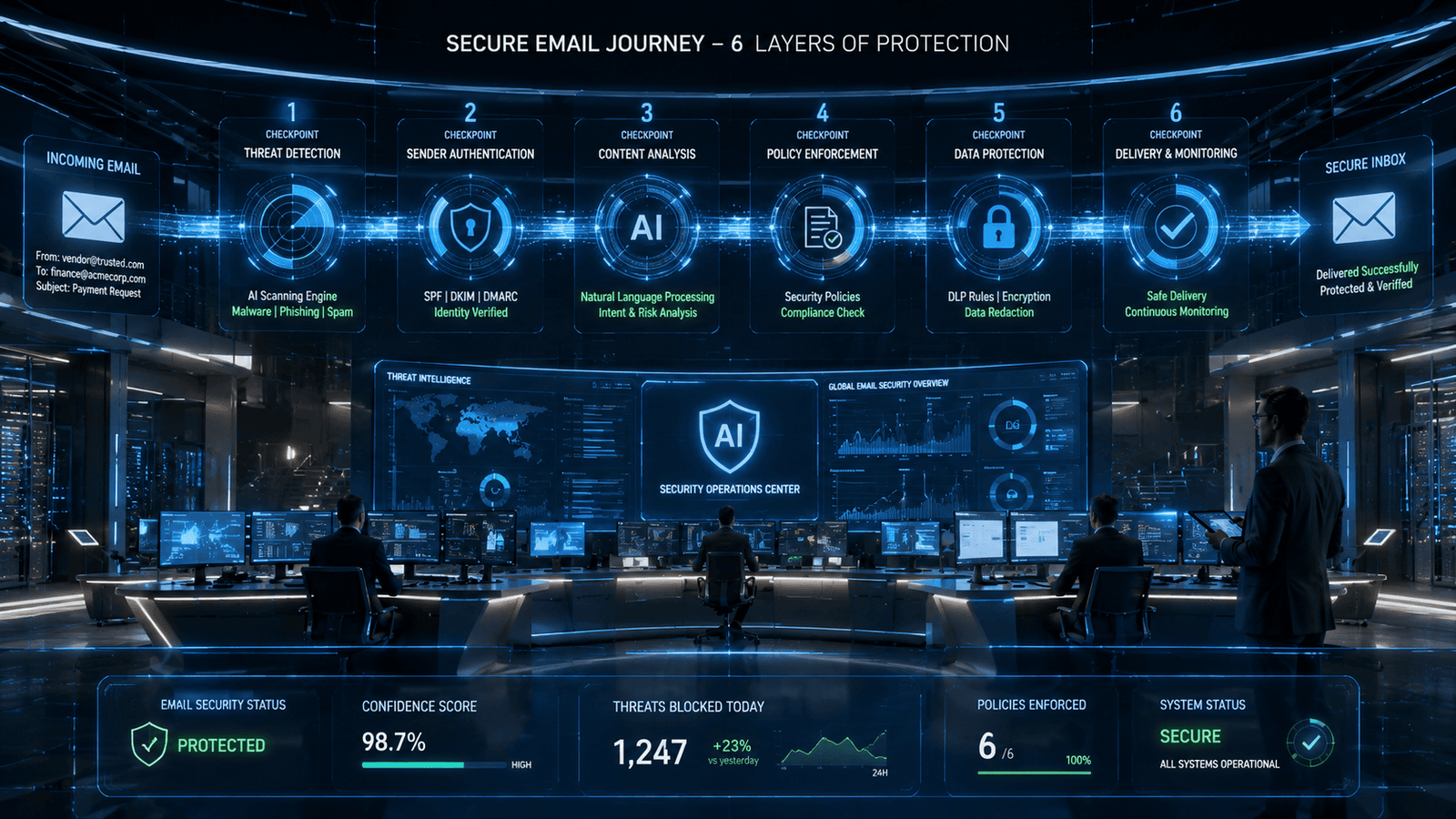
A modern email security solution sits between the internet and your inbox, creating a multi-layered protection chain. Understanding how these layers work helps you evaluate solutions and set policies that reflect your actual business risk.
The Six-Stage Protection Chain
Stage 1: Inbound Filtering
Every incoming email is analyzed before it reaches any employee inbox. The system checks sender reputation, scans attachments in a sandboxed environment (safely detonating suspicious files away from your network), evaluates link destinations, and scores the message for phishing indicators. High-risk messages are quarantined; borderline messages may be tagged with a warning banner.
Stage 2: Authentication Checks
The system verifies that the sending server is authorized for the claimed domain. Emails failing SPF, DKIM, or DMARC checks are quarantined or rejected outright, with policy outcomes determined by your DMARC configuration.
Stage 3: Content Inspection
Email body and attachments are scanned for malicious code, credential-harvesting links, and sensitive data patterns. Advanced systems use behavioral analysis, not just signature matching, to catch novel threats.
Stage 4: Outbound DLP Scanning
Outbound DLP catches data leaving your organization through email, whether accidentally by an employee or deliberately through a compromised account. It acts as your last line of defense against internal data leakage.
Stage 5: Real-Time Alerting
Your IT contact or managed security partner is notified the moment a suspicious pattern is detected, a spike in failed login attempts, an unusual data export, or a BEC pattern being established over multiple messages.
Stage 6: Reporting and Audit Logs
A detailed record of what was blocked, what got through, and what actions were taken is critical for compliance requirements, incident investigation, and demonstrating security posture to clients or insurers.
Delphi Infotech's Email Security Solutions run through all six stages without requiring a dedicated IT team to manage the process daily. You set the policies; we help you monitor them and respond when alerts fire
Pricing and Cost-Effectiveness: What SMBs Should Expect
Most email security vendors price per mailbox per month. Understanding what each price tier actually delivers helps you make the right investment decision for your business. Here is a realistic breakdown of the three market tiers:
Entry-Level / Bundled | $2 – $5 per user / month
Basic spam filtering and limited phishing detection. Typically included with standard Microsoft 365 or Google Workspace plans. Suitable for very low-risk environments but does not cover BEC, impersonation, or advanced malware delivery.
Mid-Market SMB | $6 – $12 per user / month
Anti-phishing controls, Data Loss Prevention, MFA integration, and reporting dashboards. This is the recommended entry point for most small businesses handling client data, financial transactions, or regulated information.
Advanced / Managed | $15 – $25 per user / month
AI-based behavioral detection, full BEC protection, active incident response, email encryption, and ongoing managed monitoring. Best suited for businesses in regulated industries or those with elevated risk profiles.
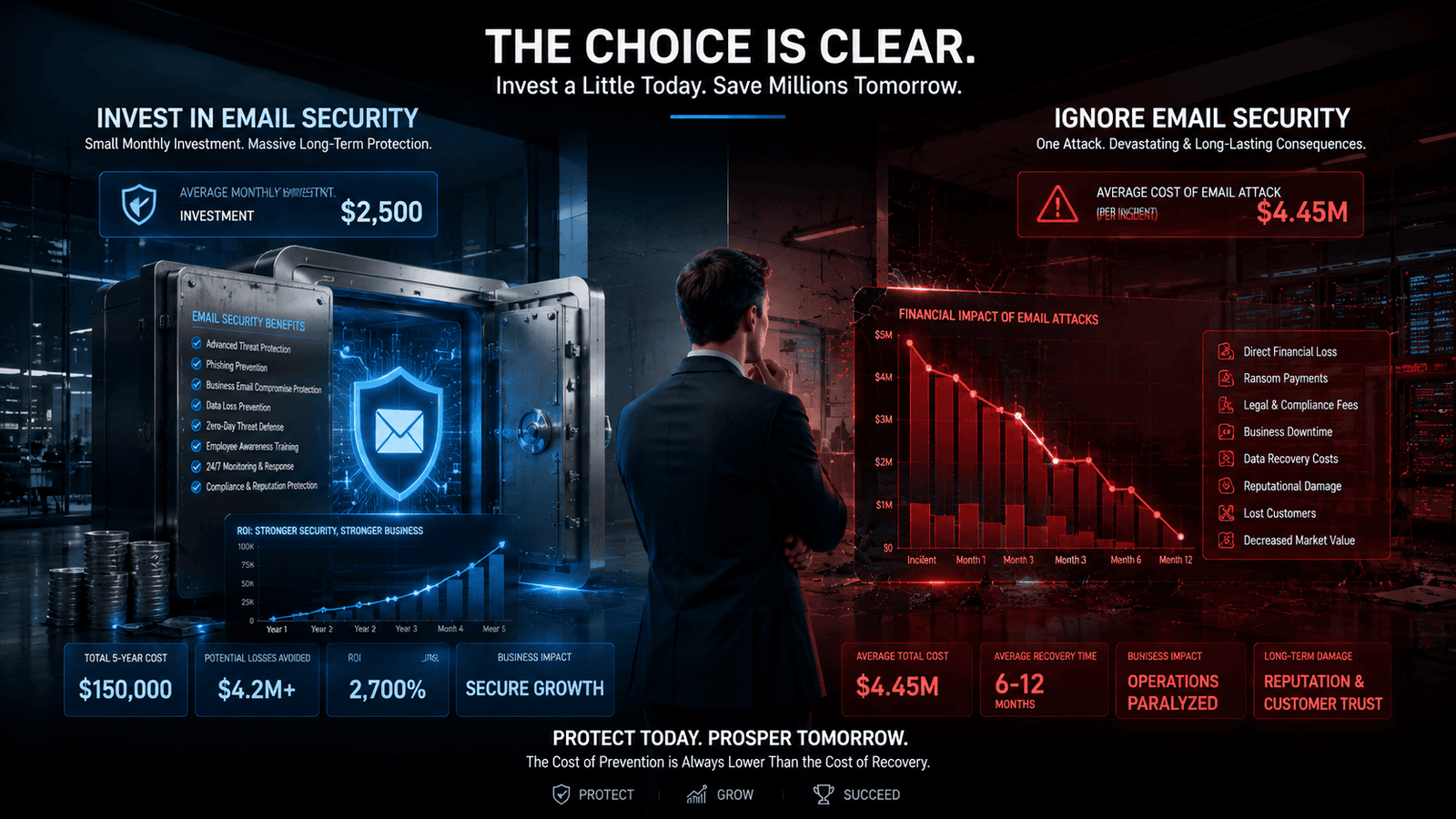
The real cost calculation is not the monthly subscription; it is what one successful attack costs you. At an average BEC loss of $134, 952, even the most advanced tier pays for itself many times over in the first year alone.
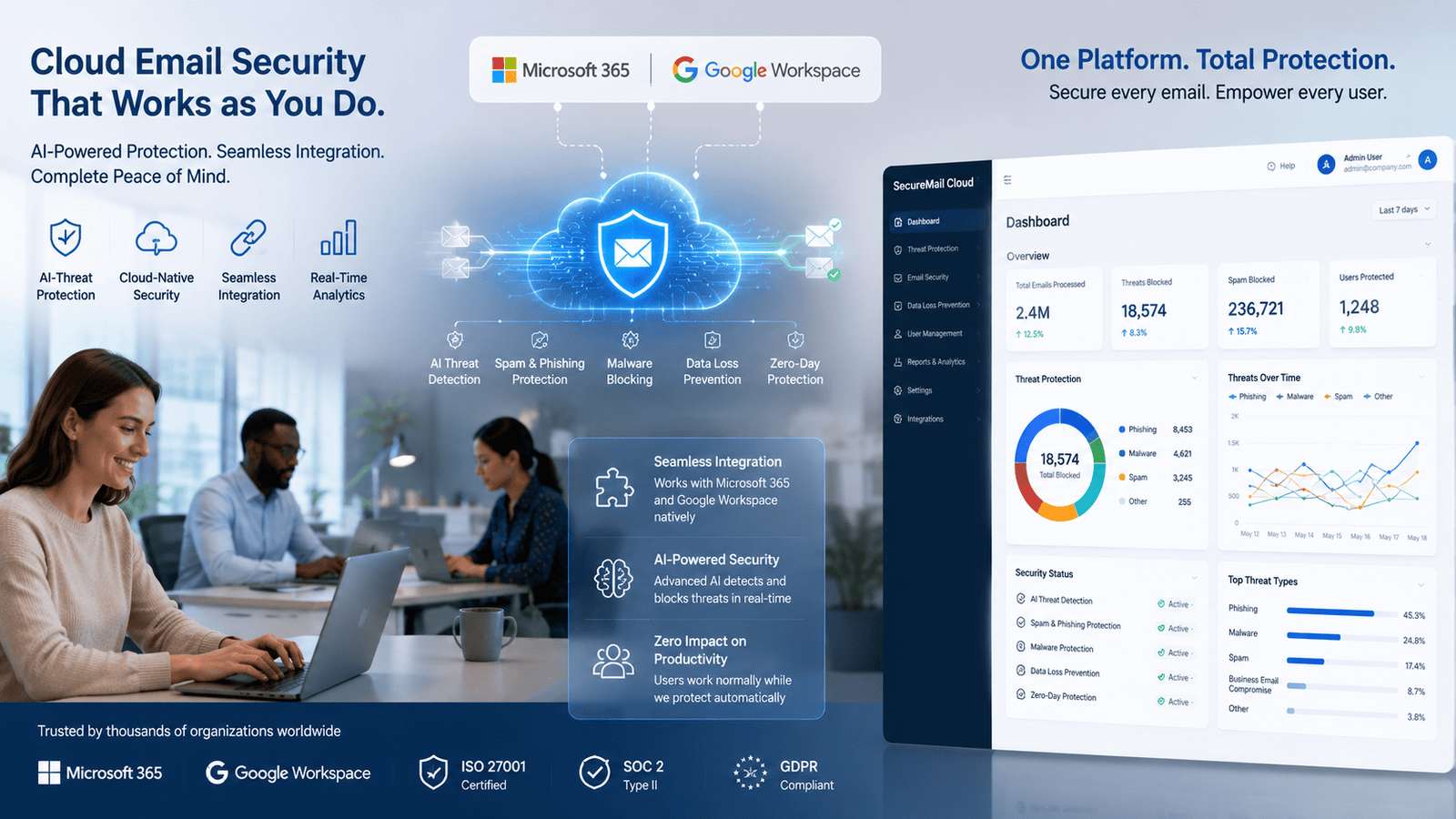
Small businesses running Google Workspace or Microsoft 365 often assume their built-in filtering is adequate protection. It is not. Native platform protections catch common spam, not sophisticated impersonation attacks or targeted BEC campaigns. Layering a dedicated solution on top of your existing platform is the industry-standard approach, and both Workspace and Microsoft 365 support third-party integrations via API or MX record change with minimal setup time.
Ease of Deployment for Teams Without Dedicated IT
This is where most vendor comparisons go quiet. Setup complexity is a real barrier for small businesses, and the best SMB-focused solutions address it directly. There are three primary deployment methods, each suited to different environments:
MX Record Redirection
All inbound email is routed through the security platform before it hits your inbox. Configuration takes under an hour with vendor guidance and requires no changes to your existing email client or user experience. This is the most comprehensive approach for full inbound and outbound coverage.
API-Based Integration
Connects directly to Microsoft 365 or Google Workspace without changing your mail flow. Zero disruption to daily operations, and often the fastest path to deployment. Ideal for businesses that cannot afford any downtime during transition.
Email Client Plugins
Add a reporting button to Outlook or Gmail so employees can flag suspicious emails with a single click. This extends your detection capability through human intelligence; your team becomes an active part of your threat detection network.
Cloud-based solutions with centralized dashboards are the most practical choice for small teams. You get visibility into your entire organization's email activity from one screen, and policy changes apply across all users instantly, no per-device configuration required.
How Delphi Infotech Protects Small Businesses
Delphi Infotech provides cybersecurity solutions tailored to protect businesses from evolving cyber risks. Every business we work with gets a protection layer built around their specific context, their team size, their compliance requirements, their existing tools, and their actual risk profile.
Our Email Security Solutions go beyond filtering. We deliver:
Anti-phishing and BEC controls configured to your specific business context and communication patterns
Outbound Data Loss Prevention to protect client data and meet regulatory obligations
Endpoint Management Software integration so email-borne malware cannot move laterally through your network if it does get through
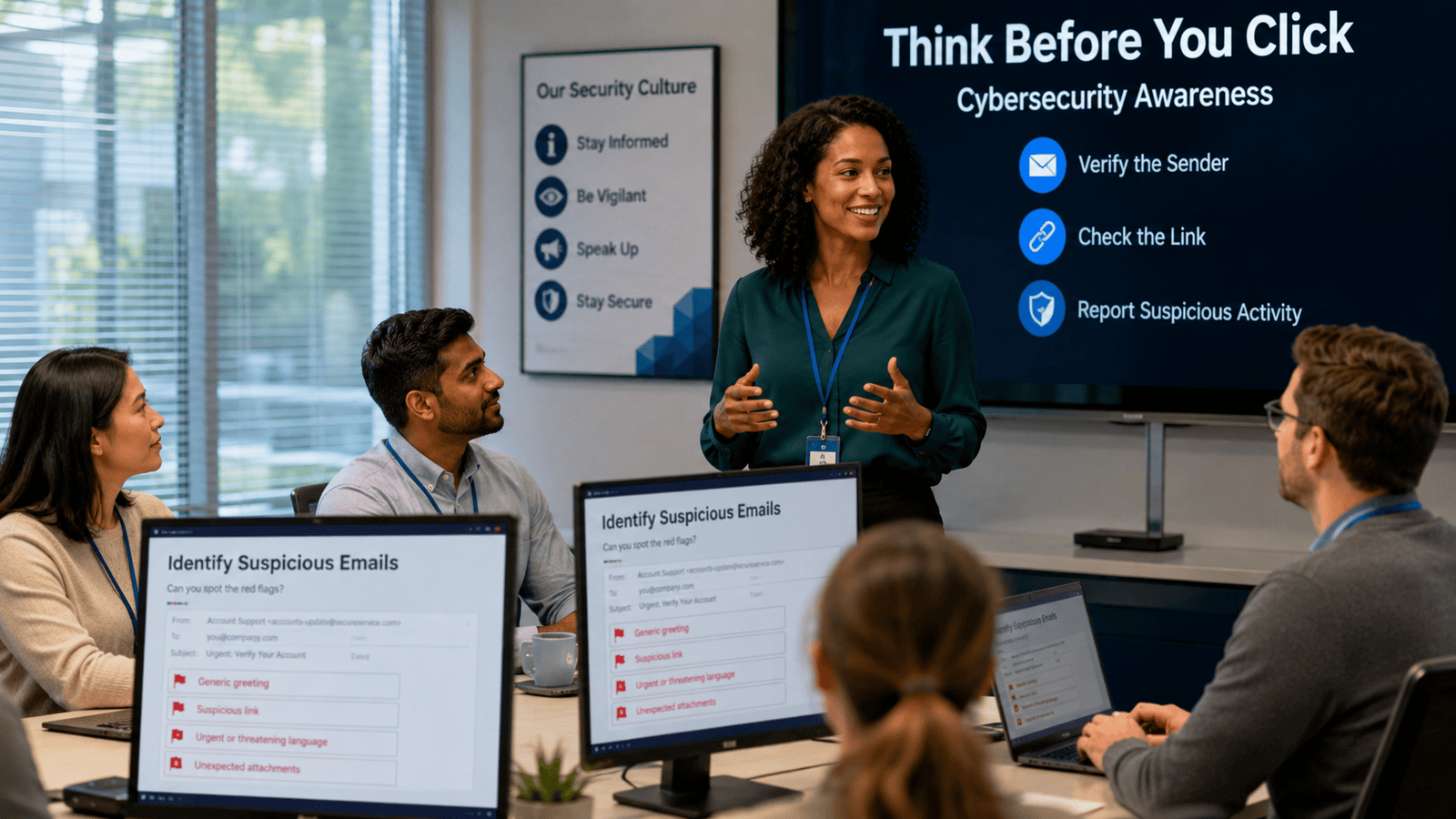
Employee awareness training so your team becomes part of the defense, not the weakest link
Continuous monitoring with expert cybersecurity support that small businesses cannot afford to staff internally
Our emphasis on proactive security measures means we do not wait for an incident report before acting. We run continuous monitoring and provide the expert support and training that transforms your email infrastructure from a liability into a protected asset.
Conclusion
Email is your biggest risk exposure and your most direct line to every employee and client relationship. Protecting it is not optional; it is a foundational business decision.
The best email security solutions for small businesses combine anti-phishing controls, sender authentication, Data Loss Prevention, and fast incident response, built for teams that do not have a full security department on staff. These are not enterprise tools retrofitted for small business use; they are purpose-built for the SMB environment, where every dollar of protection must be justified and every hour of downtime is costly.
Key Takeaways
- Email is the #1 attack vector: Over 90% of cyberattacks begin with email. Small businesses are disproportionately targeted because they are perceived as easier to compromise.
- Default protection is not enough: Microsoft 365 and Google Workspace built-in filters catch spam, not sophisticated phishing or BEC attacks. A dedicated solution is required.
- BEC attacks average $134, 952 per incident: The cost of one successful attack far exceeds the cost of a full year's email security subscription at any tier.
- Six core features define effective email security: Anti-phishing, sender authentication (SPF/DKIM/DMARC), DLP, MFA integration, encryption, and incident containment tools.
- Deployment is simpler than you think: Most cloud-based solutions deploy in under 24 hours via API integration or MX record change, with no dedicated IT expertise required.
- Pricing is accessible: Entry-level protection starts at $2–5 per user per month. Advanced managed solutions run $15–25 per user per month, a fraction of the cost of one successful attack.
- Proactive security pays: Partnering with a managed security provider like Delphi Infotech means threats are identified and neutralized before they become incidents, not after.
Frequently Asked Questions
Q: Is built-in filtering from Microsoft 365 or Google Workspace enough for a small business?
No. Native platform filters are designed to catch common spam and known malware, but they are not built to stop Business Email Compromise, domain impersonation, or targeted phishing campaigns. BEC attacks, in particular, often contain no malware or suspicious links, just convincing social engineering that rule-based filters cannot detect. A dedicated, layered solution adds the behavioral analysis and context-aware detection that built-in tools miss.
Q: How long does it take to deploy an email security solution?
Most cloud-based solutions deploy in under 24 hours via API integration or MX record change. The API integration method, common for Microsoft 365 and Google Workspace environments, introduces zero disruption to your existing mail flow. Delphi Infotech handles the configuration end-to-end so your team does not need dedicated IT knowledge to get started or to manage the platform afterward.
Q: What is Business Email Compromise (BEC) and why should small businesses care?
BEC is a form of fraud where criminals impersonate executives, vendors, or trusted partners to trick employees into transferring money or sharing sensitive data. Unlike traditional phishing, BEC attacks are highly targeted and often involve days or weeks of research before the actual attack. The average loss per incident is $134, 952 according to the FBI's IC3 2023 report, making it one of the most financially damaging threats a small business can face, and one of the most likely to succeed without proper protections in place.
Q: Do email security solutions work with Google Workspace?
Yes. The majority of leading email security solutions integrate seamlessly with Google Workspace via API, without disrupting your existing mail flow or requiring end users to change their email habits. Some solutions also offer MX record-based deployment for deeper inspection capabilities. Delphi Infotech can guide you through the integration specific to your platform, including configuring DMARC policies and DLP rules appropriate to your industry.
Q: What is the difference between spam filtering and email security?
Spam filtering removes unwanted bulk email, newsletters you did not sign up for, mass marketing messages, and known spam sources. Email security addresses a fundamentally different threat landscape: targeted phishing, malware delivery, credential harvesting, account takeover, and data exfiltration. They are not the same thing, and relying only on spam filtering leaves your organization completely exposed to the attacks that actually cause financial and reputational damage.
Q: How does email security help with compliance requirements?
Industries subject to HIPAA, PCI-DSS, SOC 2, or GDPR have specific requirements around email data protection, audit logging, and encryption. A purpose-built email security solution provides the audit trails, DLP controls, and encryption capabilities needed to satisfy these requirements. Delphi Infotech helps map your email security configuration to your specific compliance framework, reducing audit risk and helping demonstrate due diligence to regulators, insurers, and enterprise clients.
Get started today at Delphi Infotech and discover how simple effective email security can be.