
Are Our Smart Devices Really Safe?
What if the very devices designed to make our lives smarter are quietly exposing us to new cyber risks?
From smart homes and wearable devices to industrial sensors and connected vehicles, the Internet of Things (IoT) has become deeply embedded in our daily lives. In India, in particular, rapid digitization, driven by smart cities, digital payments, and connected infrastructure, has accelerated IoT adoption across industries.
But with this growth comes a serious challenge: security.As more devices connect to the internet, every sensor, router, or smart appliance becomes a potential entry point for cybercriminals.

The Explosive Growth of IoT in 2026
The Internet of Things has evolved from a futuristic concept into a foundational technology powering modern digital ecosystems.
Today, IoT devices power:
Smart homes
Healthcare monitoring systems
Industrial automation
Smart transportation
Smart agriculture
Smart cities
India, in particular, has seen massive growth in connected infrastructure. With government initiatives such as smart cities and digital governance, IoT deployments have increased across sectors like manufacturing, retail, and energy.
The market reflects this expansion. The IoT security market in India is projected to grow from $269 million in 2025 to over $2.7 billion by 2034, demonstrating how critical security is becoming for connected technologies.
However, the rapid deployment of IoT devices often prioritizes functionality over security. Many devices are shipped with:
Weak authentication
Unpatched firmware
Default passwords
Insecure communication protocols
As a result, millions of connected devices are exposed to potential exploitation.
For organizations embracing digital transformation, IoT security is no longer optional, it is fundamental to operational continuity and trust.What Is IoT Security?
IoT security refers to the strategies, technologies, and policies used to protect connected devices and networks from cyber threats.
Unlike traditional cybersecurity, which focuses mainly on computers and servers, IoT security must address a much broader ecosystem that includes:
Sensors
Embedded systems
Edge devices
Network gateways
Cloud platforms
Mobile applications
A secure IoT environment typically includes several layers of protection:
1. Device Security
Ensuring each connected device has secure firmware, authentication, and encryption.
2. Network Security
Protecting communication channels between devices and servers.
3. Data Protection
Securing the data collected by IoT devices from unauthorized access.
4. Cloud Security
Protecting cloud platforms where IoT data is stored and processed.
5. Identity and Access Management
Ensuring only authorized users and systems can access IoT infrastructure.
Because IoT environments often involve thousands or even millions of devices, maintaining security across the entire network becomes a complex challenge.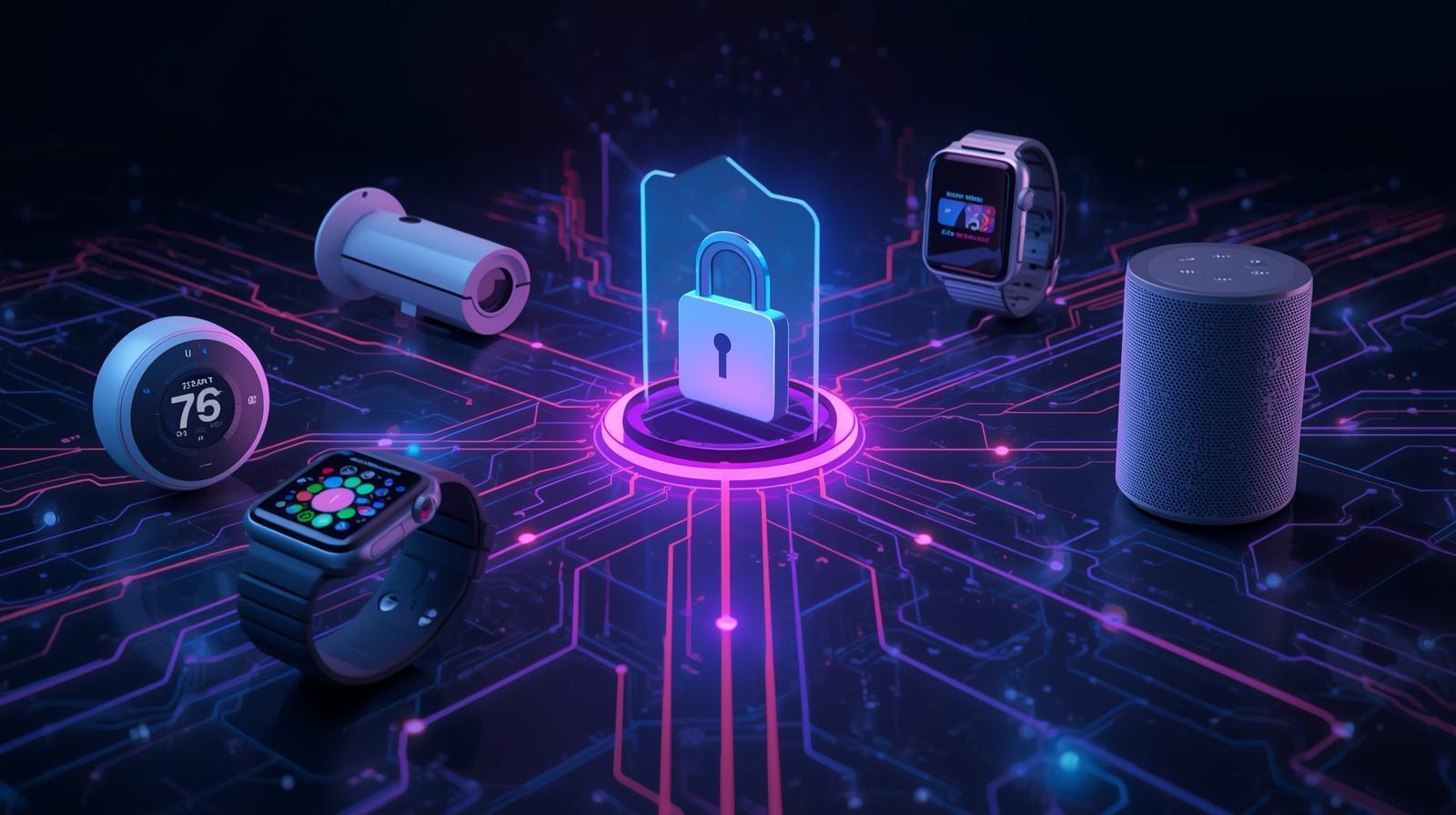
Why IoT Security Matters More Than Ever in 2026
The importance of IoT security has dramatically increased due to several converging factors.
1. Massive Attack Surfaces
Every connected device creates another potential entry point for attackers.
Many IoT devices operate continuously and are deployed in locations that are difficult to monitor, such as factories, warehouses, and transportation systems.
2. Increasing Cyber Attacks
Organizations in India now face over 3,000 cyberattacks per week on average, demonstrating the scale of modern threats.
Attackers increasingly exploit IoT vulnerabilities because they are easier to compromise than traditional systems.
3. Critical Infrastructure Risks
IoT devices are now used in critical sectors such as:
Energy grids
Healthcare systems
Transportation networks
Manufacturing plants
A compromised IoT system could disrupt essential services and cause significant economic damage.
4. AI-Powered Cyber Threats
Cybercriminals are increasingly using artificial intelligence to automate attacks, making them faster and more difficult to detect.
In fact, 72% of Indian organizations reported experiencing AI-powered cyberattacks, showing how rapidly threat capabilities are evolving.
These factors combined make IoT security a strategic priority for governments, businesses, and individuals.Common IoT Security Threats
Understanding the threat landscape is essential for designing effective security strategies.
Below are some of the most common threats targeting IoT systems.
1. Botnet Attacks
Compromised IoT devices can be hijacked and used to form large botnets capable of launching distributed denial-of-service (DDoS) attacks.
Malware families such as Mirai have historically exploited weak IoT devices.
2. Device Hijacking
Hackers may take control of IoT devices such as cameras, routers, or industrial sensors.
Once compromised, these devices can:
Steal data
Spy on users
Launch additional attacks
3. Data Interception
Unencrypted IoT communications allow attackers to intercept sensitive data during transmission.
This is especially risky in healthcare and financial systems.
4. Credential Exploitation
Many IoT devices ship with default login credentials that users rarely change.
Cybercriminals often scan networks to identify such vulnerable devices.
5. Malware Infections
Backdoor and botnet-style malware dominate IoT attacks, accounting for the majority of detected threats.
Once infected, devices can remain compromised for long periods without detection.IoT Security Challenges Organizations Face
Despite growing awareness, organizations still struggle to implement strong IoT security.
Several factors contribute to this challenge.
Device Diversity
IoT ecosystems often include devices from multiple manufacturers, each with different security capabilities.
Limited Device Resources
Many IoT devices have limited processing power and cannot run traditional security software.
Lack of Standardization
Unlike traditional IT systems, IoT devices lack universal security standards.
Patch Management Difficulties
Updating firmware across thousands of devices can be difficult and time-consuming.
Shadow IoT
Employees often install unauthorized smart devices in workplaces, creating hidden security risks.
These challenges require holistic security strategies that address both technology and human factors.The Role of Data Protection and Archiving
IoT devices generate enormous amounts of data every second.
This makes data management and security critical components of IoT protection strategies.
One important concept organizations must understand is what is data archiving.
Data archiving refers to the process of storing historical data securely for long-term retention while removing it from active systems.
In IoT environments, archiving serves several purposes:
Reducing storage costs
Improving system performance
Maintaining compliance with regulations
Supporting forensic investigations after security incidents
Proper data archiving ensures that sensitive information remains protected while still being accessible when needed.
When combined with encryption and access control, data archiving becomes a powerful tool in maintaining long-term IoT data integrity.Dark Web Monitoring and IoT Security
Another emerging strategy in cybersecurity is the use of dark web monitoring tools.
These tools scan hidden areas of the internet where cybercriminals trade stolen data, credentials, and hacking tools.
For organizations managing large IoT ecosystems, dark web monitoring tools can provide early warning signals by detecting:
Leaked device credentials
Stolen corporate data
Discussions of vulnerabilities targeting specific devices
By identifying threats before they escalate, businesses can respond quickly and reduce potential damage.
In a world where cybercrime marketplaces operate on the dark web, proactive monitoring has become an essential part of modern security operations.
Best Practices for Strengthening IoT Security
Organizations can significantly reduce risk by adopting strong IoT security practices.
1. Use Strong Authentication
Replace default credentials with strong passwords and multi-factor authentication.
2. Implement Network Segmentation
Separate IoT devices from critical systems to limit potential damage.
3. Regular Firmware Updates
Keep device firmware updated to patch known vulnerabilities.
4. Encrypt Data
Ensure all communications between devices and servers are encrypted.
5. Monitor Network Activity
Continuous monitoring helps identify unusual behavior or potential intrusions.
6. Deploy Zero Trust Architecture
Zero Trust models require continuous authentication and verification for every device and user.
7. Conduct Security Audits
Regular vulnerability assessments help identify weaknesses in IoT infrastructure.
By implementing these measures, organizations can build a more resilient IoT ecosystem.The Future of IoT Security
Looking ahead, IoT security will continue evolving alongside emerging technologies.
Several trends are shaping the future of IoT protection.
AI-Driven Security
Artificial intelligence will increasingly be used to detect anomalies in IoT networks.
Edge Security
As edge computing grows, security controls will move closer to devices.
Hardware-Based Security
Manufacturers are integrating security chips directly into devices.
Regulatory Frameworks
Governments around the world—including India—are developing regulations that require stronger IoT security standards.
Automated Threat Detection
Security platforms will rely more on automation to detect and respond to threats in real time.
As IoT ecosystems expand, security must evolve at the same pace as innovation.

IoT technology has transformed the way we live and work. From smart homes and healthcare devices to industrial automation, connected systems are now integral to modern infrastructure.
However, this connectivity also introduces significant security risks.
The rapid rise in cyberattacks, the growing sophistication of AI-powered threats, and the expansion of IoT networks mean that security must be prioritized at every stage of the IoT lifecycle.
By implementing strong authentication, monitoring threats with advanced tools such as dark web monitoring tools, and adopting secure data practices like understanding what data archiving is, organizations can build resilient IoT environments.
In 2026 and beyond, IoT security is not just a technical requirement; it is a strategic necessity for protecting digital ecosystems and maintaining trust in connected technologies.Key Takeaways
IoT devices are rapidly expanding across industries and everyday life.
Cyberattacks targeting connected devices are increasing worldwide.
India faces millions of cyber threats annually due to rapid digital adoption.
Weak device security and default credentials remain major vulnerabilities.
Understanding concepts like what is data archiving helps organizations protect IoT-generated data.
Dark web monitoring tools provide early detection of leaked credentials and cyber threats.
Strong authentication, encryption, and continuous monitoring are essential for IoT security.
FAQ:
Q: What is IoT security?
A: IoT security refers to the technologies and practices used to protect connected devices, networks, and data from cyber threats.
Q: Why is IoT security important in 2026?
A: IoT security is critical because the number of connected devices has grown rapidly, increasing the attack surface for cybercriminals and exposing organizations to new risks.
Q: What are the biggest IoT security threats?
A: Common threats include botnets, malware infections, credential attacks, data interception, and device hijacking.
Q: What is data archiving and why is it important for IoT?
A: Data archiving is the process of storing historical data securely for long-term retention. In IoT systems, it helps manage large data volumes while maintaining compliance and security.
Q: How do dark web monitoring tools help with cybersecurity?
A: Dark web monitoring tools scan hidden online marketplaces and forums to detect leaked credentials or stolen data, enabling organizations to respond to threats before they escalate.