
A major insurance firm in Hyderabad once faced a silent storm. Sensitive customer forms—PAN records, health declarations, nominee details—began appearing in an unauthorized cloud folder. No breach alarms. No red alerts. The leakage originated from a single employee shifting files to a personal cloud drive for convenience.
Internal panic followed.
Regulators demanded explanations.
Clients questioned trust.
Operations stalled for nearly two weeks.
This incident, similar to numerous cases we’ve observed across India, underscores a larger reality: threats seldom announce themselves through dramatic cyberattacks. Instead, they emerge through overlooked missteps, unmonitored data paths, misaligned controls, and gaps in daily governance.
Intrusion Prevention Systems (IPS), cloud DLP, and compliance auditing form a triad designed to eliminate blind spots across infrastructure, data flows, and regulatory obligations. Over years of securing Indian enterprises—from BFSI giants to SaaS startups—our experience reinforces a single truth: security resilience emerges only when network defense, data defense, and governance defense operate in unison.
This extended publication offers a deeply experienced perspective designed for leaders ready for mature, long-term cyber stability.Intrusion Prevention Systems: A Deep Dive Through Experience
IPS serves as a continuously vigilant force embedded within network pathways. Steadfast and unblinking, it evaluates behavior patterns, identifies irregular traffic movements, intercepts malicious sequences, and neutralizes attempts aimed at exploiting vulnerabilities.
In seasoned deployments, IPS evolves beyond a mere signature-blocking engine. It transitions into a behavioral intelligence layer performing functions such as:
Inline response capable of halting malicious activity instantly
Advanced protocol analysis for both common and complex traffic types
Behavioral modeling that studies normal vs abnormal patterns
Correlation with identity data for improved context
SSL/TLS traffic inspection through secure methods
Granular rule tuning aligned with Indian regulatory environments
Auto-learning modules adapting to business rhythms
Through our engagements, IPS logs often become the decisive source during forensic investigations. They reveal reconnaissance attempts, strange lateral movements, botnet callbacks, or brute-force escalation that other systems fail to highlight.
In Indian enterprises—often balancing legacy systems with modern cloud environments—IPS becomes indispensable. Legacy databases, ERP systems, ageing VPN infrastructure, vendor portals, and branch office networks create unique threat corridors. IPS stands as the central filtering mechanism shielding the enterprise from exploitation.You can edit text on your website by double clicking on a text box on your website. Alternatively, when you select a text box a settings menu will appear. your website by double clicking on a text box on your website. Alternatively, when you select a text box
IPS Significance Across India’s Cyber Terrain
India’s digital ecosystem introduces complexities rarely seen in uniform Western infrastructures. Enterprises frequently operate across hybrid clouds, on-prem networks, and distributed teams. IPS benefits these settings in numerous critical areas:
Defense for Fragmented Architectures
Diverse infrastructures—AWS, Azure, private cloud, on-prem—communicate simultaneously. IPS standardizes inspection, ensuring uniform protection.
Shielding Against Intensifying Attack Volume
Attackers increasingly focus on Indian targets due to rapid digitization. IPS becomes essential for filtering aggressive traffic surges, botnets, automated scripts, and high-frequency intrusion probes.
Support for Lean Security Teams
Talent shortages across India mean many firms rely on small SOC teams. IPS reduces manual workloads by autonomously eliminating low-tier threats.
Compliance Reinforcement
Financial institutions, digital payment providers, healthcare platforms, and data processing companies face serious regulatory expectations. IPS logs provide critical evidence during audits, assessments, and board-level reviews.
Defense for Legacy + Modern Hybrid Environments
Indian enterprises rarely operate in clean architectures. IPS offers stability, ensuring modern systems do not inherit risks from ageing components.Cloud DLP Through a Senior Consultant’s Lens
Cloud DLP stands as the guardian of sensitive information scattered across cloud environments. In practice, DLP extends far beyond data scanning. Through our deployments, we’ve seen it successfully prevent leaks arising from:
Accidental email attachments
Files shared externally through SaaS tools.
Copying data to personal cloud drives
Misconfigured cloud folders and buckets
Shadow IT usage within departments
Overly permissive IAM policies
Third-party vendor integrations
AI-driven tools storing sensitive text unintentionally
Mature cloud DLP systems deliver extensive capabilities:
Discovery & Classification
Sensitive data—PII, PHI, financial records, IP—is identified automatically across storage, communication streams, and document repositories.
Label Propagation Across Environments
Data labels follow documents as they move through email, collaboration apps, cloud storage, or endpoint devices.
Context-Aware Monitoring
Policies consider user identity, location, device type, application, and behavior patterns—rather than relying solely on content.
Data Movement Protection
Transfers through USB, email, uploads, APIs, and personal storage undergo rigorous scrutiny.
Real-Time Action
Threatening or unauthorized actions trigger responses such as blocking, quarantining, encrypting, or alerting.
Integration with Existing Cloud Platforms
Modern cloud DLP integrates seamlessly with Office 365, Google Workspace, Salesforce, HR systems, developer platforms, and internal cloud apps.
Through our Indian market experience, cloud DLP often reveals data pathways leadership teams never knew existed—autosync features, background mobile app uploads, developer misconfigurations, and overly open collaboration channels.Growing Demand for Cloud DLP Across Indian Enterprises
India’s cloud adoption curve is steep and accelerating. This expansion brings benefits but also immense risk if not governed. Cloud DLP becomes essential across scenarios such as:
Rapid Expansion of Cloud Usage
Organizations adopt new SaaS platforms monthly, often without central oversight. Shadow platforms become invisible data drains.
Human-Centric Data Leakage Risks
Employees frequently move data outside controlled environments while working on cross-functional tasks or remote setups. Cloud DLP assists in retaining visibility.
Regulatory Pressure Intensifying Across Sectors
The Digital Personal Data Protection Act (DPDP), upcoming industry-specific amendments, and international mandates require strict protection for personal and financial data.
Vendor Ecosystem Complexity
Indian companies partner with analytics firms, outsourcing vendors, cloud integrators, and marketing agencies. Data travels widely; DLP ensures controlled movement.
Growing Use of AI Tools
Employees often copy sensitive text into AI-powered writing, coding, or research tools. DLP safeguards against leaks through such platforms.
Through consistent deployments, cloud DLP continues to emerge as the foundation of data-centric security across Indian enterprises.Compliance Auditing: The Governance Engine
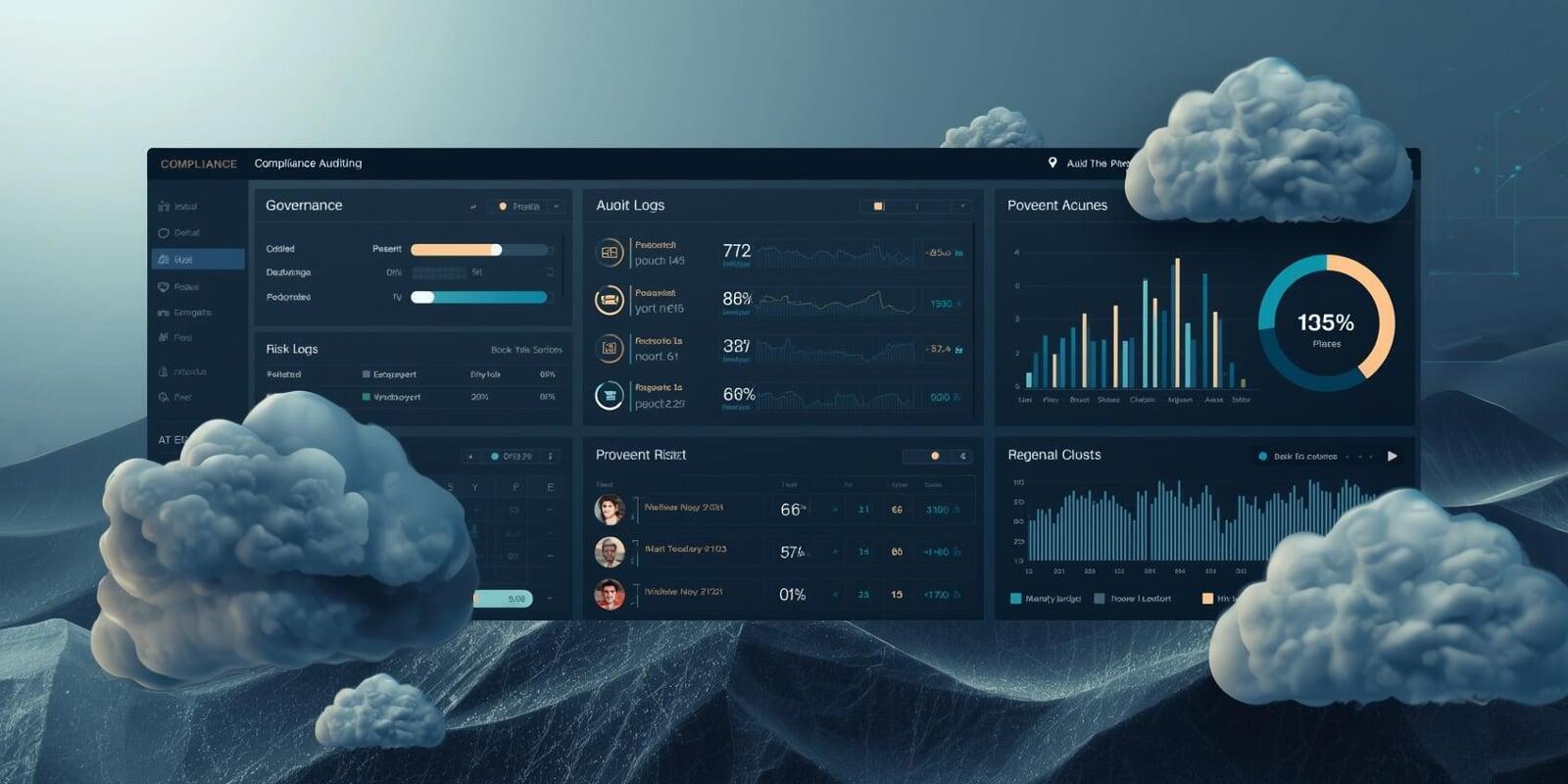
Compliance auditing serves as the reinforcing backbone, ensuring consistent security behavior, accurate documentation, and defensible accountability. Mature auditing procedures accomplish tasks such as:
Tracking configuration changes
Identifying drift within cloud environments
Ensuring IAM policies remain aligned to least privilege
Maintaining logs suitable for regulatory inspections
Preserving the integrity of access histories
Highlighting unusual privilege escalations
Validating DLP and IPS effectiveness
Combining controls into unified governance dashboards
Organizations with strong auditing enjoy significant benefits:
Reduced legal exposure, better board-level visibility, improved employee accountability, lower risk of regulatory penalties, smoother incident investigations, and greater customer trust.
The Unified Security Triad: IPS, Cloud DLP & Compliance Auditing
Our long-term engagements confirm the synergistic strength of integrating these three layers.
IPS Contribution
Immediate elimination of malicious traffic
Deep insight into network behavior
Protection during early intrusion phases
Stabilization of hybrid architecture traffic
Cloud DLP Contribution
Visibility into sensitive data across cloud ecosystems
Regulation of data movement
Enforcement of sharing and access rules
Prevention of accidental or intentional exfiltration
Compliance Auditing Contribution
Continual validation of controls
Comprehensive log retention
Governance consistency
Board-ready reporting
Evidence for regulators and clients
Together, they form a security structure that covers networks, data, human behavior, regulatory demands, and operational governance.
In our experience, enterprises that unite these technologies operate with far fewer incidents, avoid costly downtime, and navigate regulatory requirements with ease.Implementation Blueprint: The Experienced Approach a Heading
Below is our step-by-step framework for smooth adoption across Indian firms:
Phase 1 — Assessment & Discovery
Review of existing infrastructure
Mapping sensitive data repositories
Identifying cross-departmental data flows
Evaluating vendor and SaaS exposure
Aligning leadership on risk tolerance
This phase clarifies the enterprise’s real environment—not the ideal one leadership assumes.
Phase 2 — IPS Deployment & Optimization
Inline placement at strategic network points
Calibration to minimize false positives
Integration with SIEM solutions
Creation of correlation rules
Continuous tuning through real activity patterns
IPS requires careful nurturing. With proper tuning, it filters noise and focuses attention on genuine threats.
Phase 3 — Cloud DLP Enablement
Cloud-wide scanning for PII and sensitive documents
Classification model updates aligned with Indian regulations
Progressive enforcement: monitor → warn → block
Integration with collaboration apps, email, and developer tools
Real-time alerts routed to SOC teams.
This phase improves visibility before implementing stronger enforcement actions.
Phase 4 — Compliance Program Activation
Automated configuration assessments
IAM privilege audits
Log retention policy formation.
Generation of unified compliance dashboards
Execution of routine reviews based on risk tier
Auditing brings discipline to everyday operations, ensuring drift never expands unnoticed.
Phase 5 — Culture & Governance Evolution
Employee awareness sessions
Guidelines for handling sensitive information
Establishment of security champions across departments
Cross-functional governance committees
Documentation for long-term institutional integrity
Challenges Unique to India’s Enterprise Ecosystem
Through years of guidance, we’ve observed a consistent set of barriers:
Budget Sensitivities
Many Indian enterprises operate with tight margins. Our method emphasizes phased adoption and automation to reduce long-term operational costs.
Skill Gaps in Cyber Teams
DLP and IPS automation reduces dependency on rare expertise.
Shadow IT Across Departments
Discovery and DLP capabilities illuminate unknown platforms.
Complexity within Vendor Ecosystems
Distributed vendor access expands risk surfaces. Auditing and DLP tighten these edges.
Regulatory Shifts
Indian laws evolve rapidly. Compliance dashboards and automated controls help enterprises stay aligned without constant manual effort.
Cultural Resistance to Change
Session-based training and leadership engagement assist in reducing friction.
India’s unique digital growth curve necessitates an approach deeply attuned to this environment.Traits of a Mature Cybersecurity Posture in India
Enterprises reaching maturity demonstrate:
Stringent Zero Trust enforcement
Unified IPS–DLP–SIEM visibility
Automated evidence generation
Minimal privilege models across cloud platforms
Consistency in cloud configuration states
Robust logging and forensic readiness
Clear governance pathways
C-suite and board-level security involvement
Key Takeaways
IPS acts as the front-line interceptor, blocking malicious traffic and analyzing deep behavioral cues across networks.
Cloud DLP stands as the central guardian of sensitive information moving across cloud platforms, ensuring safe, governed, and compliant data usage.
Compliance auditing secures long-term operational integrity, enabling organizations to meet regulatory requirements and maintain internal consistency.
The combination of IPS, cloud DLP, and auditing forms a comprehensive foundation for modern Indian cybersecurity resilience.
Organizations integrating these layers gain a decisive edge—improved visibility, reduced risk, stronger compliance, and greater operational continuity.
India’s digital expansion demands a security posture grounded in discipline, visibility, and resilience. Through our extensive engagements, the union of IPS, cloud DLP, and compliance auditing consistently emerges as the cornerstone of strong enterprise defense.
With this tri-layer approach, organizations safeguard data, streamline regulatory alignment, support operational continuity, and enhance trust among customers, partners, and regulators. This ecosystem allows enterprises to grow confidently, adapt to evolving threats, and stand resilient amid technological transformation.FAQ Section
Q: Is IPS necessary even with strong perimeter controls?
A: Yes. IPS provides deeper inspection, behavior analysis, and inline interception that standard controls cannot deliver.
Q: Does cloud DLP disrupt day-to-day operations?
A: Mature methods ensure seamless integration, with enforcement gradually strengthened.
Q: Are audits only for large enterprises?
A: No. Even smaller firms benefit from governance clarity and risk reduction.
Q: Does DPDP increase the importance of data oversight?
A: Yes. Sensitivity around personal data has risen, making DLP essential.
A: They can, but auditing ensures stability, transparency, and long-term consistency.